Step-by-Step Guide
Your highest-performing Instagram ad probably won’t come from a studio shoot. It’ll come from a customer filming a 60-second video on their phone. Here’s why UGC works, how to source it, and how to scale the creatives that actually convert.
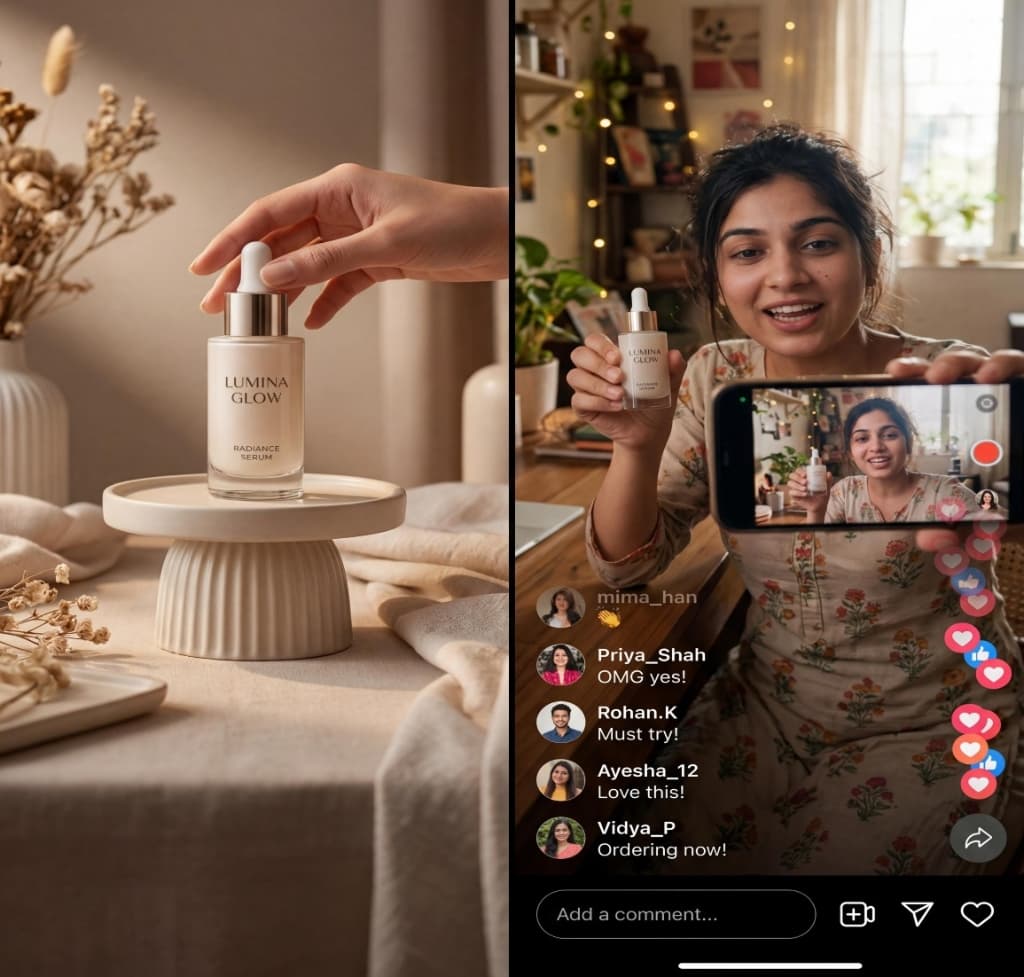
Instagram users scroll past ads instinctively. They’ve trained themselves to recognise branded content in milliseconds — the lighting, the framing, the tone — and their thumb keeps moving.
UGC disrupts that pattern because it looks like the feed. A real person, in their real environment, talking about a real experience. The viewer’s brain processes it as content, not advertising.
UGC doesn't trigger the 'ad skip' reflex. It looks like content from a friend, so the viewer pauses.
A real person's experience is more credible than any brand claim. Social proof in video form.
No studio, no crew, no post-production budget. A smartphone, natural light, and an authentic story.
You can produce 10 UGC variations in the time and cost of one branded shoot — giving you more to test.
The data consistently confirms this: UGC-style ads generate higher click-through rates, lower CPAs, and stronger engagement than polished branded content — particularly for cold audience prospecting on Meta.
A real customer or creator looking at the camera, sharing their honest experience with your product. The most trusted ad format on Instagram. Hook pattern: "I've been using [product] for [time period] and I need to talk about it."
The product appears naturally as part of someone's real routine — morning skincare, pre-workout, cooking. The brand is present but not the centrepiece. Low-pressure, aspirational, and demonstrates usage in a relatable context.
Real-time reaction to receiving and opening the product. Genuine first impressions — the packaging, the texture, the smell, the fit. Hook: "I finally got the [brand] package everyone has been talking about."
Visual proof of outcome. Most powerful in categories with demonstrable results — skincare, fitness, home organisation, weight management. Note: before/after claims must comply with Meta's advertising policies.
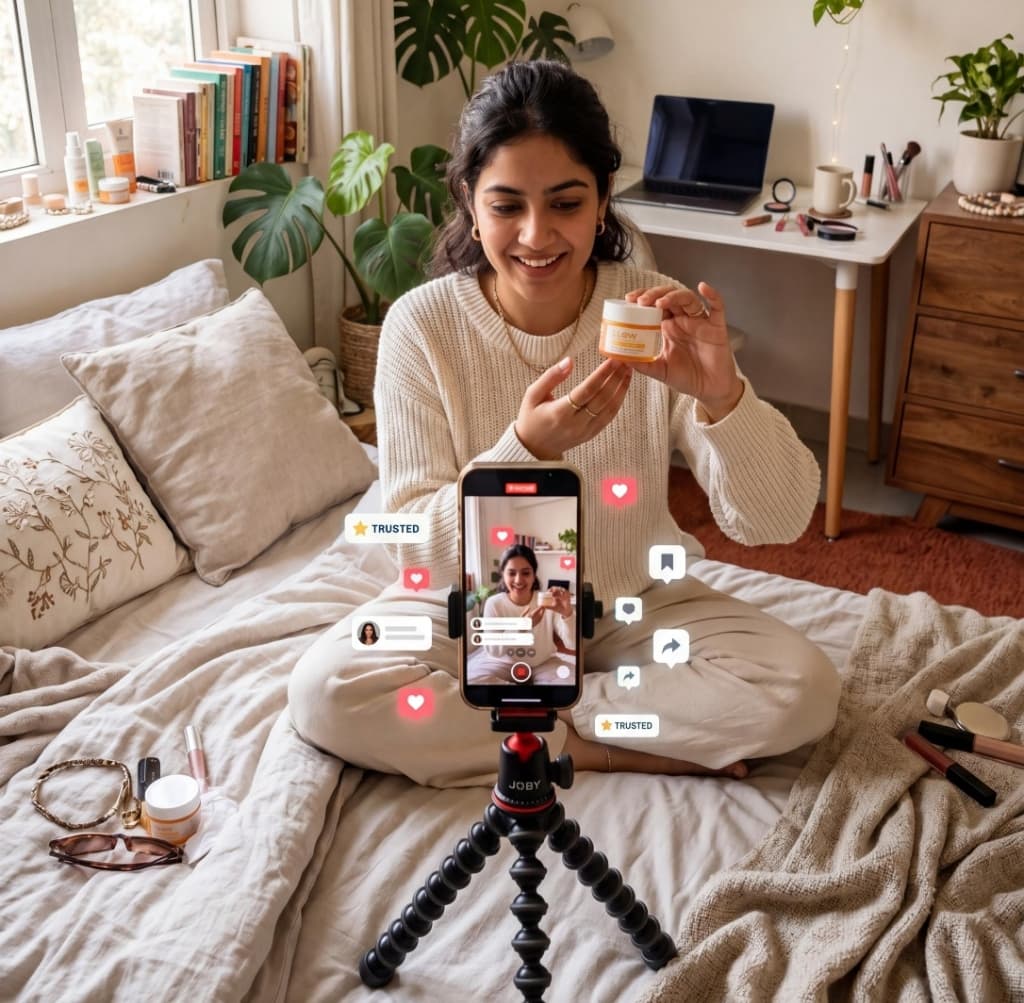
Post-purchase email sequences, loyalty programme incentives, branded hashtags. Costs almost nothing and produces the most authentic material.
Creators who specialise in authentic-looking ad content. ₹5,000–₹25,000 per video. Brief them on the hook, problem, result, and CTA — don't over-script.
5,000–50,000 followers. Smaller audiences, higher trust, more affordable. Always secure usage rights before running their content as a paid ad.
Founder-led content converts exceptionally well for brand story and product origin stories. If you're the founder, get on camera — your face builds trust no creator can replicate.
Hook (non-negotiable)
Give them 2–3 hook options. "I've been using this for 30 days and I need to talk about it" beats "Hey guys, today I'm going to review this product."
Problem statement
The specific pain point your product solves. Be concrete. "Dry, flaky skin in winter" — not "skincare concerns."
Result
What changed? Be specific. "My skin texture improved noticeably in week 2" — not "I loved it."
CTA
One action. "Link in bio," "check the first comment," "search [brand name]."
What NOT to over-brief: Exact words, tone, hand gestures, background. The less scripted it sounds, the better it performs.
Run variations as separate ad sets with equal budgets for 5–7 days. What to test:
Hook variations (same video, different first 3 seconds)
Creator variation (same brief, 3 different creators)
Format variation (talking head vs routine vs unboxing)
Length variation (30s vs 60s vs 90s)
Two UGC ads with similar CPAs can have very different CM2 if they attract different customer profiles. The UGC that brings in high-LTV, low-return customers is the one worth scaling — even if its CPA is slightly higher.

People who already know your brand. They've seen the "authentic testimonial." Now they need a clear, confident offer — which branded creative delivers better.
If your product sits at the high end, relentless UGC can erode perceived premium. Some branded content maintains the brand equity that justifies the price point.
First impressions matter. A clean product reveal — well-lit, well-shot — can outperform UGC when you're introducing something genuinely new.
The most effective D2C creative strategy is not “UGC only” — it’s UGC-led for prospecting, branded creative for retargeting, and constant testing of both.
UGC outperforms branded creative on Instagram for one reason: it earns attention that ads typically can’t buy.
It looks like the feed. It sounds like a friend. It tells a story that starts with a problem the viewer actually has.
The brands investing in consistent UGC production, systematic testing, and creator relationships are building a creative flywheel that gets cheaper and more effective over time. The brands still waiting for their studio shoot to pay off are watching their CPAs climb.
Start with one creator. One brief. One week. See what happens.
Frequently Asked Questions
User-generated content (UGC) in advertising refers to content created by real people — customers, creators, or influencers — made to look organic and authentic rather than produced by a brand. UGC-style ads blend into the Instagram feed, bypass ad-skipping behaviour, and typically outperform polished branded creative for D2C prospecting campaigns.
UGC from hired creators typically ranges from ₹5,000 to ₹25,000 per video depending on deliverables and creator profile. Activating existing customers (through post-purchase emails and incentive programmes) produces the most authentic UGC at significantly lower cost. Always factor content usage rights into the arrangement if you plan to run the content as a paid ad.
Not always. UGC typically outperforms branded creative for cold audience prospecting. Branded creative often performs better for retargeting, premium brand positioning, and product launches. The highest-performing D2C creative strategies combine UGC-led prospecting with branded retargeting.
Specificity and personal relevance. "I've been struggling with hormonal acne for 5 years — nothing worked until this" outperforms "Check out this amazing skincare product." The hook addresses a real problem the viewer has, creates immediate relevance, and signals that a genuine story follows.
Flable connects your Instagram ad spend with actual revenue, returns, and COGS to show CM2 per campaign. When testing multiple UGC creatives, Flable shows you which one is generating the most profitable customers — not just which one has the best CPA or ROAS — so you scale the right creative.
CM2 per creative, per campaign. Live. Automatic.
See Your Real Profitability →Setup in 48 hours · No credit card required · Backed by Microsoft & NVIDIA