Deep Dive
Most brands do competitor research wrong. They screenshot a few ads they like, share them in a Slack channel, and call it "competitive intelligence." That’s not research. Here is the exact framework to systematically extract patterns and translate them into profitable creative strategies.
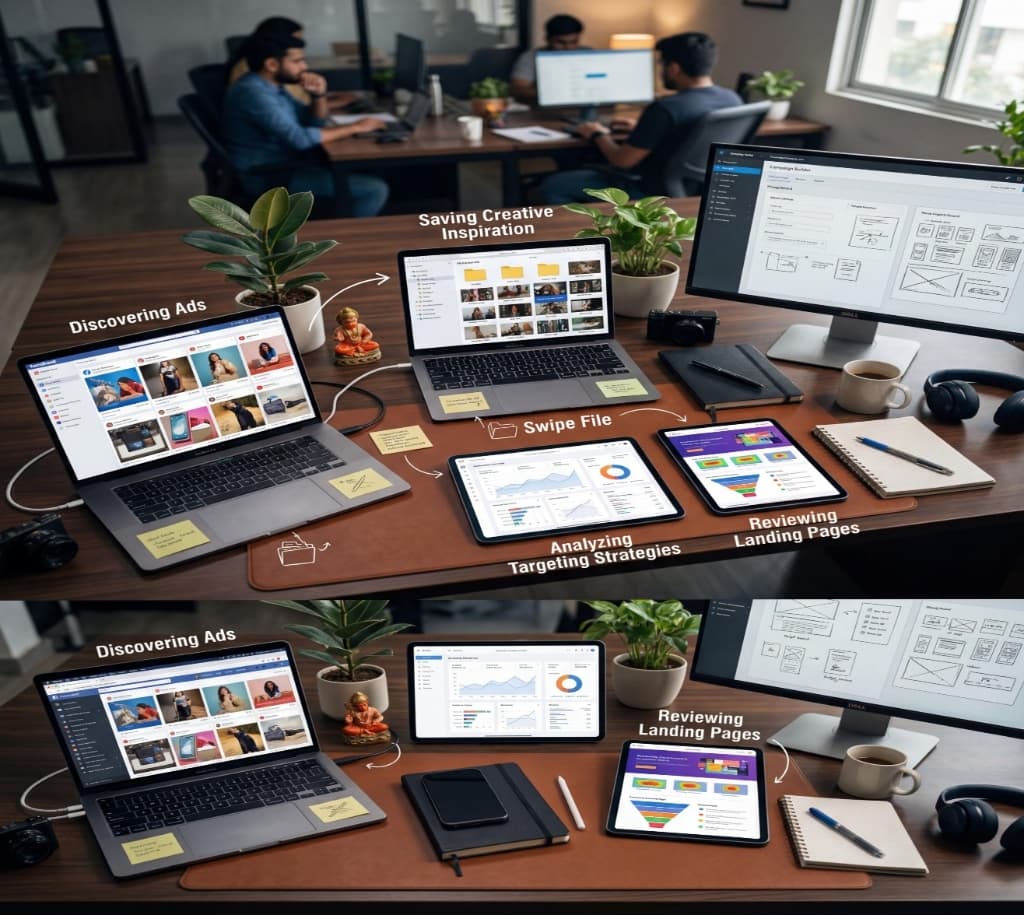
Before you research anything, define who you’re watching. Build this list once and update it quarterly.
Brands selling the same product to the same audience. These get the most attention.
Brands in your broader category competing for the same wallet, mindset, and scroll time.
Brands at the next stage of growth. They show what works at scale when budgets are larger.
Competitor research only has value if it's consistent. Weekly checks tell you patterns, trends, and shifts. What to track weekly for each competitor:
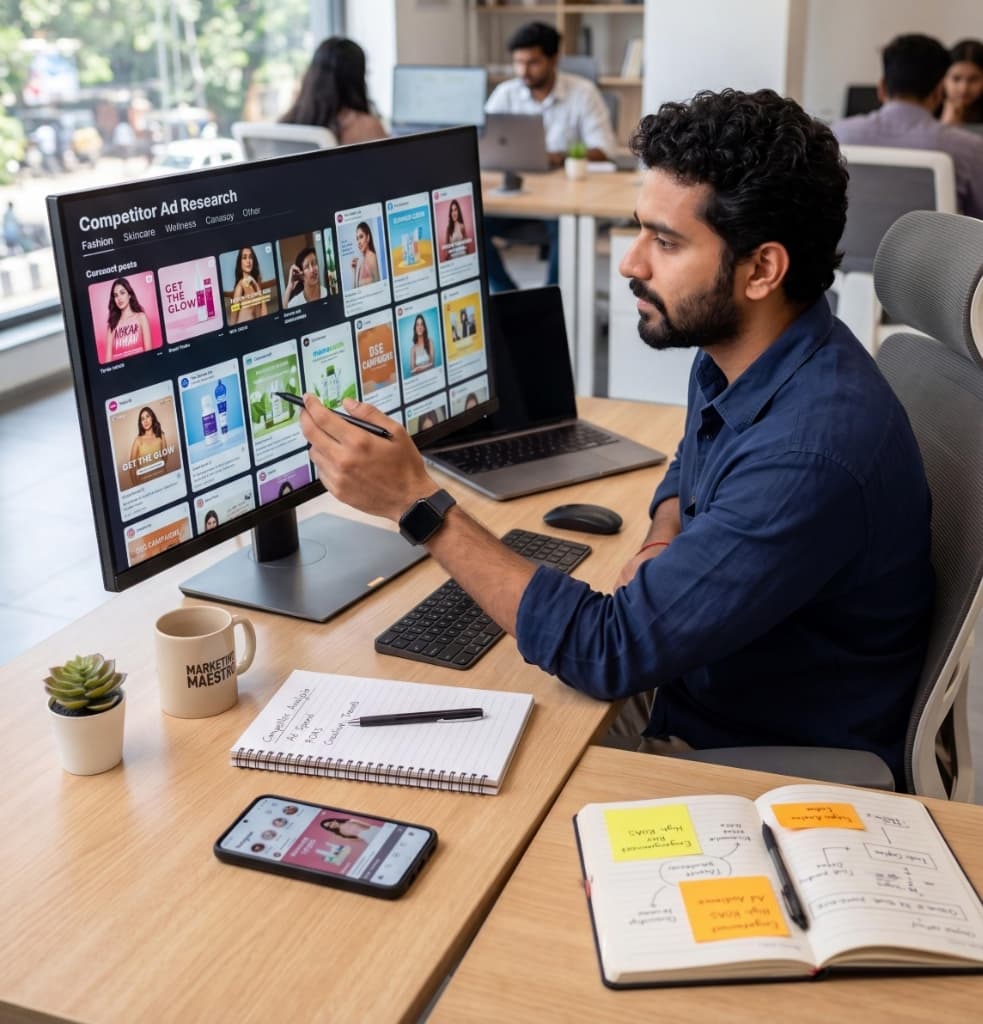
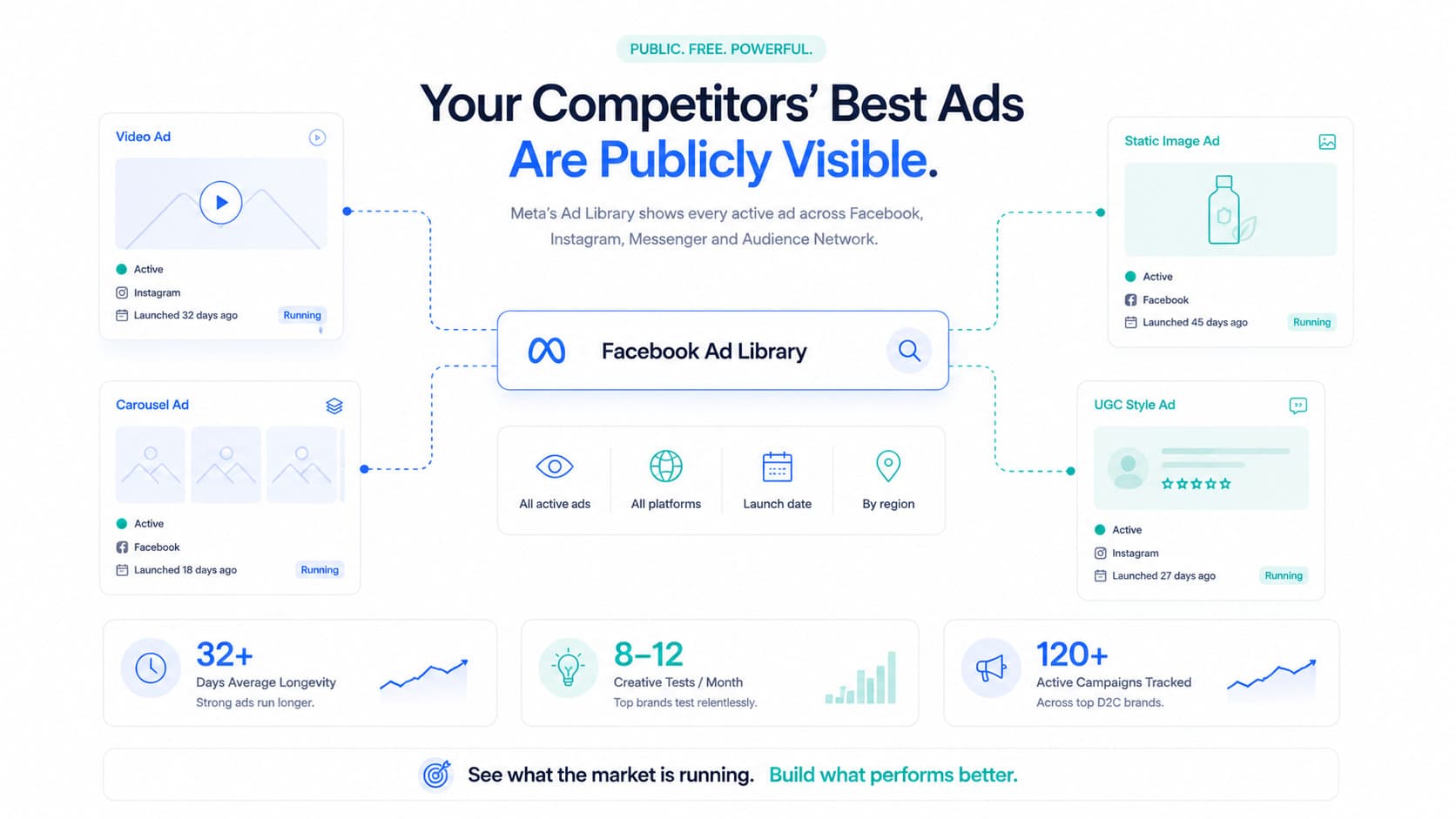
Sort by oldest first. Extract longest-running ads, hook types (problem, product, or social proof), format, offer, and copy length.
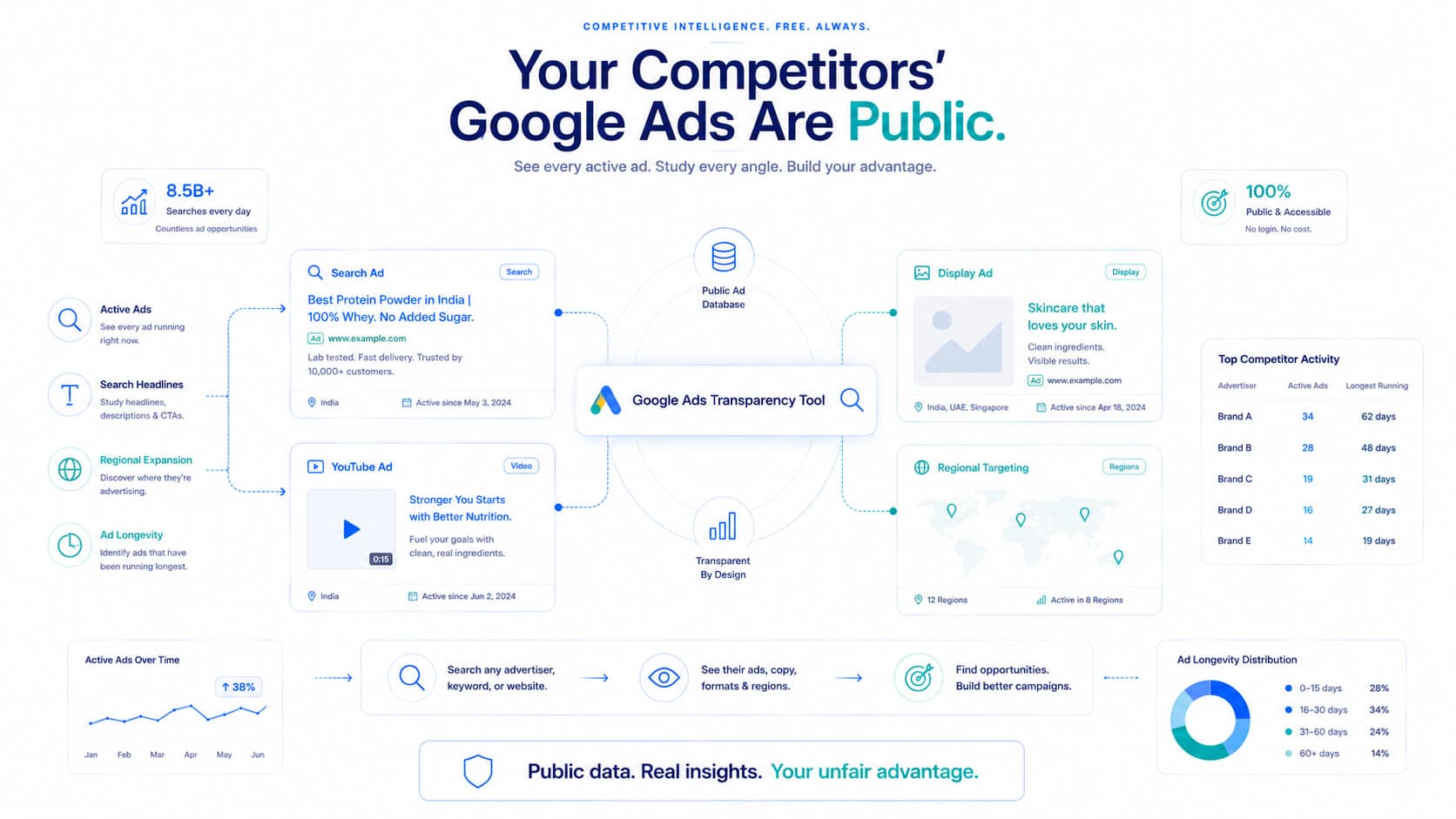
Search each competitor. Extract search headlines (keywords), and check if they are running Display or YouTube ads.
Compare landing pages to their homepage. What's different? What's being tested? Check organic content for tone and community engagement.
Data without analysis is noise. Here’s what to look for:
Look at the 10 longest-running ads. What % lead with a problem, product, or social proof? If 8/10 are problem-led, you have a hypothesis.
What promotional mechanic is most common? Free shipping? Buy 2 get 1? Frequency signals effectiveness for the audience.
What ratio of video to static? Are Reels dominating? Knowing format distribution tells you where to allocate production budget.
What is nobody saying? What audience segment is being ignored? The gap is often where the most defensible creative territory lives.
This is the step most brands skip. For competitor research to have value, it must end in a brief. Every insight should produce a testable hypothesis. If it doesn't, it's decoration.
Competitor research tells you what your competitors are doing. It doesn’t tell you whether it’s working financially for them. A competitor running a 30% off campaign might be profitable, or they might be buying revenue at a loss to hit a target. Never copy a strategy without validating your own unit economics first.
Use competitor research to build hypotheses. Use your own CM2 data to validate them.
Competitor ad research is not about finding ads to copy. It’s about understanding the creative and strategic landscape so you can make smarter decisions about where to compete, differentiate, and test next.
The framework is simple. The discipline is the differentiator.
Frequently Asked Questions
Weekly is the right cadence for active competitors. Monthly works for aspirational brands you're tracking at a distance. The value of competitive research is in pattern recognition — which only emerges from consistent, regular tracking, not occasional checks.
Yes, completely. The Facebook Ad Library and Google Ads Transparency Tool exist specifically to make ad activity publicly visible. Researching what competitors are running is standard industry practice and fully within the terms of both platforms.
Ad longevity — how long an ad has been running. If a competitor's ad has been live for 3+ weeks, they're spending money to keep it running because it's working. Longest-running ads are their best performers. Start there.
You don't — not from the ad alone. You can see that a strategy is being used consistently (a signal it's converting). You can't see whether it's profitable. Always treat competitor observations as hypotheses to test against your own CM2 data, not as strategies to replicate blindly.
Flable shows you contribution margin per campaign in real time — so when you run a creative test inspired by competitor research, you can measure whether it's profitable (not just whether it converts). You're testing against real business outcomes, not just CTR or ROAS.
Real CM2 per creative test. Know what's working — not just what's converting.
See Your Real Profitability →Setup in 48 hours · No credit card required · Backed by Microsoft & NVIDIA