Metrics Guide
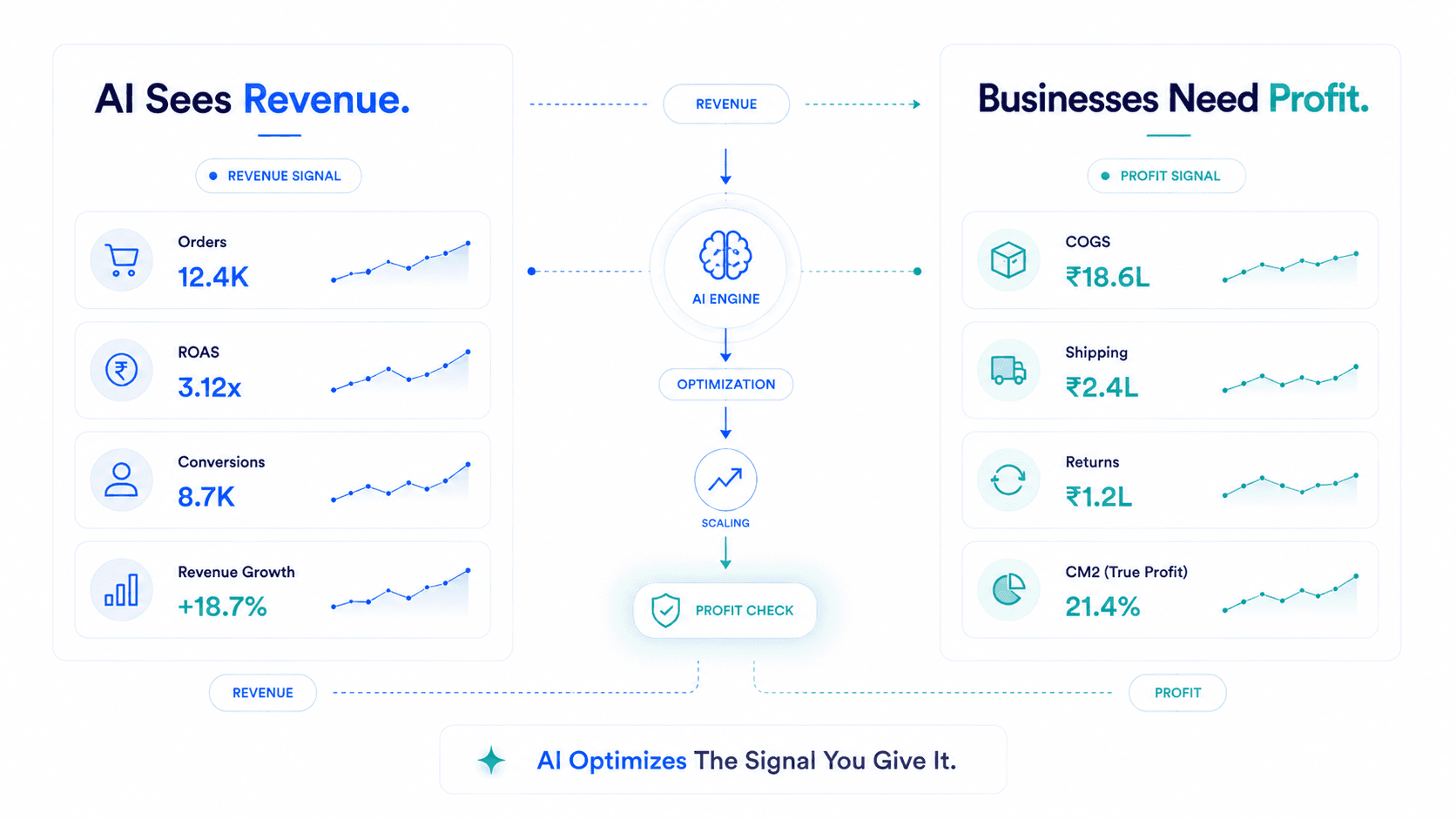
ROAS is a revenue metric pretending to be a profitability metric. POAS is the number that actually tells you whether scaling makes sense.
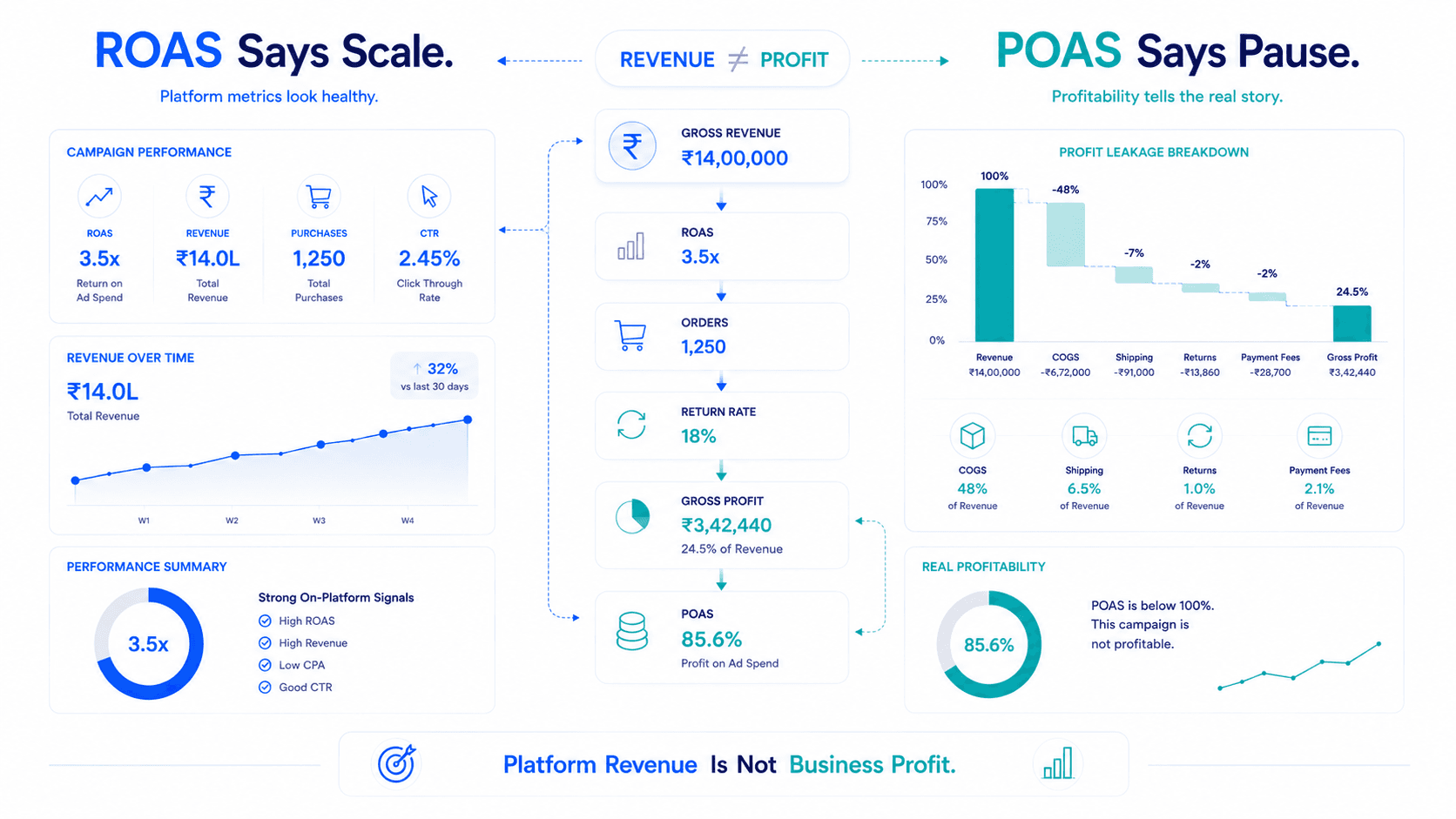
You've understood the argument. ROAS is a revenue metric pretending to be a profitability metric. POAS, Profit on Ad Spend, is the number that actually tells you whether scaling makes sense. Brands that switch to POAS make better budget decisions, scale the right campaigns, and stop growing revenue while quietly destroying margin.
Before you can calculate POAS, you need visibility into every cost between a sale and actual profit. Map your COGS per SKU, packaging costs, outbound shipping rates, return rates by category and campaign, and payment processing fees.
Pull the last 30 days of campaign data. For each campaign: POAS = (Net Revenue \u2212 COGS \u2212 Shipping \u2212 Returns Cost \u2212 Payment Fees) \u00f7 Ad Spend. Compare this to platform-reported ROAS.
Most brands discover that 20\u201340% of campaigns they thought were profitable on ROAS are actually negative on POAS.
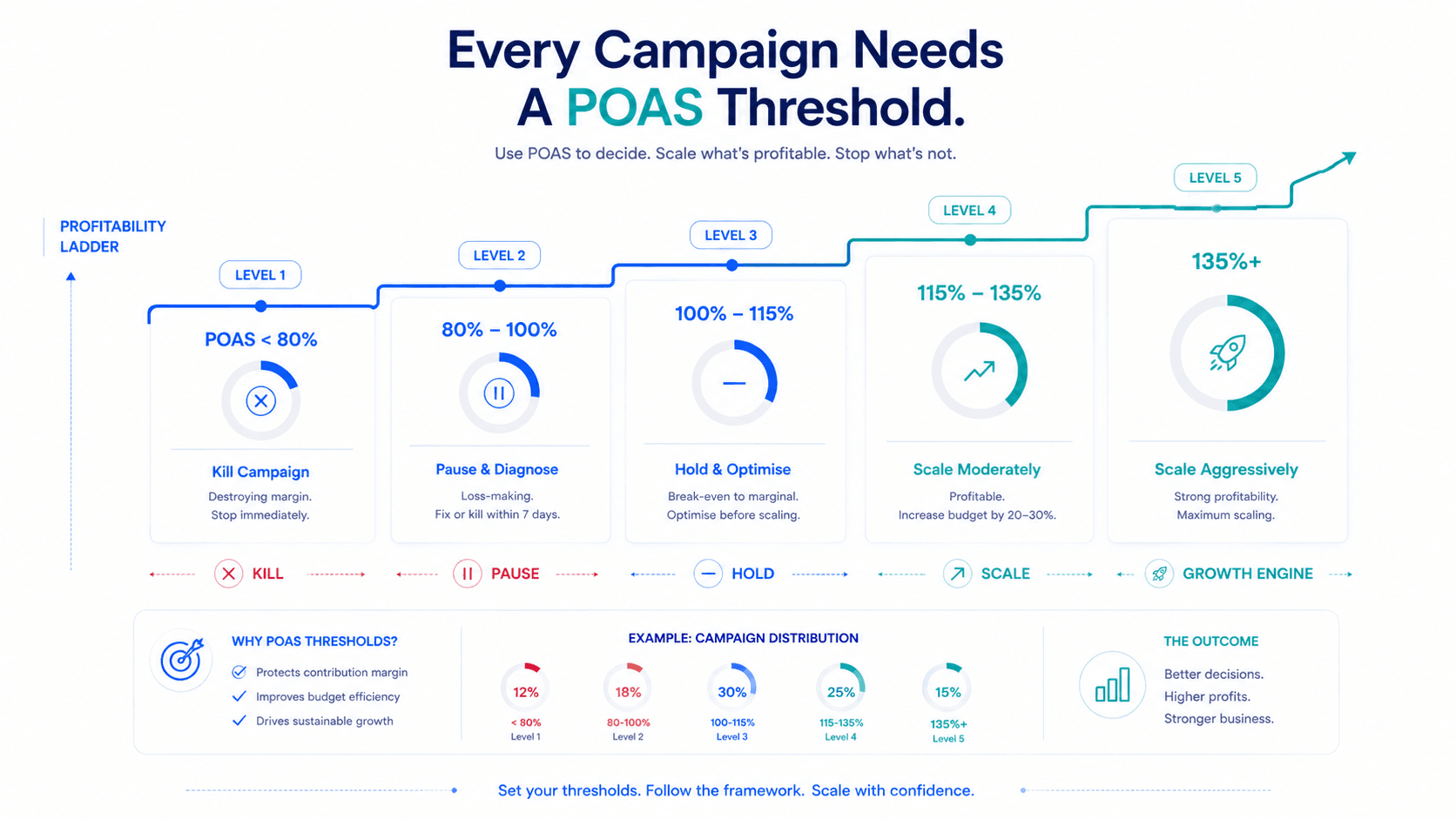
Break-even POAS is 1.0x. Most D2C brands target 1.3x\u20131.8x POAS for sustainable scaling.
Rank all active campaigns by POAS. Scale above target. Hold at target. Diagnose below target. Kill below break-even \u2014 regardless of ROAS.
Replace your weekly ROAS review with a POAS review. The agenda shifts from \u201cwhich campaigns have the highest ROAS\u201d to \u201cwhich generate the most profit per rupee of ad spend.\u201d
In Meta, use Cost Cap or Minimum ROAS bid strategies. Translate your POAS target into a ROAS target. In Google Ads, set tROAS based on POAS-adjusted calculations. The platform still optimises on ROAS \u2014 but your target protects your POAS threshold.
The switch from ROAS to POAS fundamentally changes what you optimise for \u2014 from revenue efficiency to profit efficiency. Every brand that makes this switch discovers campaigns they should have killed weeks ago and campaigns they should have scaled harder.
Frequently Asked Questions
Map your full cost stack per SKU — COGS, packaging, shipping, returns rate, and payment processing fees. Without accurate cost data, POAS calculations will be unreliable.
Yes. POAS is a measurement change, not a platform change. You continue running campaigns exactly as before. The difference is that scaling decisions are driven by external POAS calculation.
Most brands see actionable insights within 2 weeks — identifying campaigns that look profitable on ROAS but are negative on POAS. Full margin improvement typically shows within 60–90 days.
Ad spend data, Shopify revenue, COGS per product, return rates, and shipping costs. Flable AI automates this by connecting all sources and calculating real-time POAS per campaign.
Yes. Flable connects your ad accounts, Shopify data, and cost inputs to calculate live POAS and CM2 per campaign — enabling POAS-driven scaling decisions from day one.
Real POAS per campaign, live, automatic, no spreadsheets.
Start Measuring POAS \u2192