Profitability
The order notification arrives. The sale is counted. The ROAS ticks up. Fourteen days later, the same order comes back. The revenue disappears. The ad spend does not.
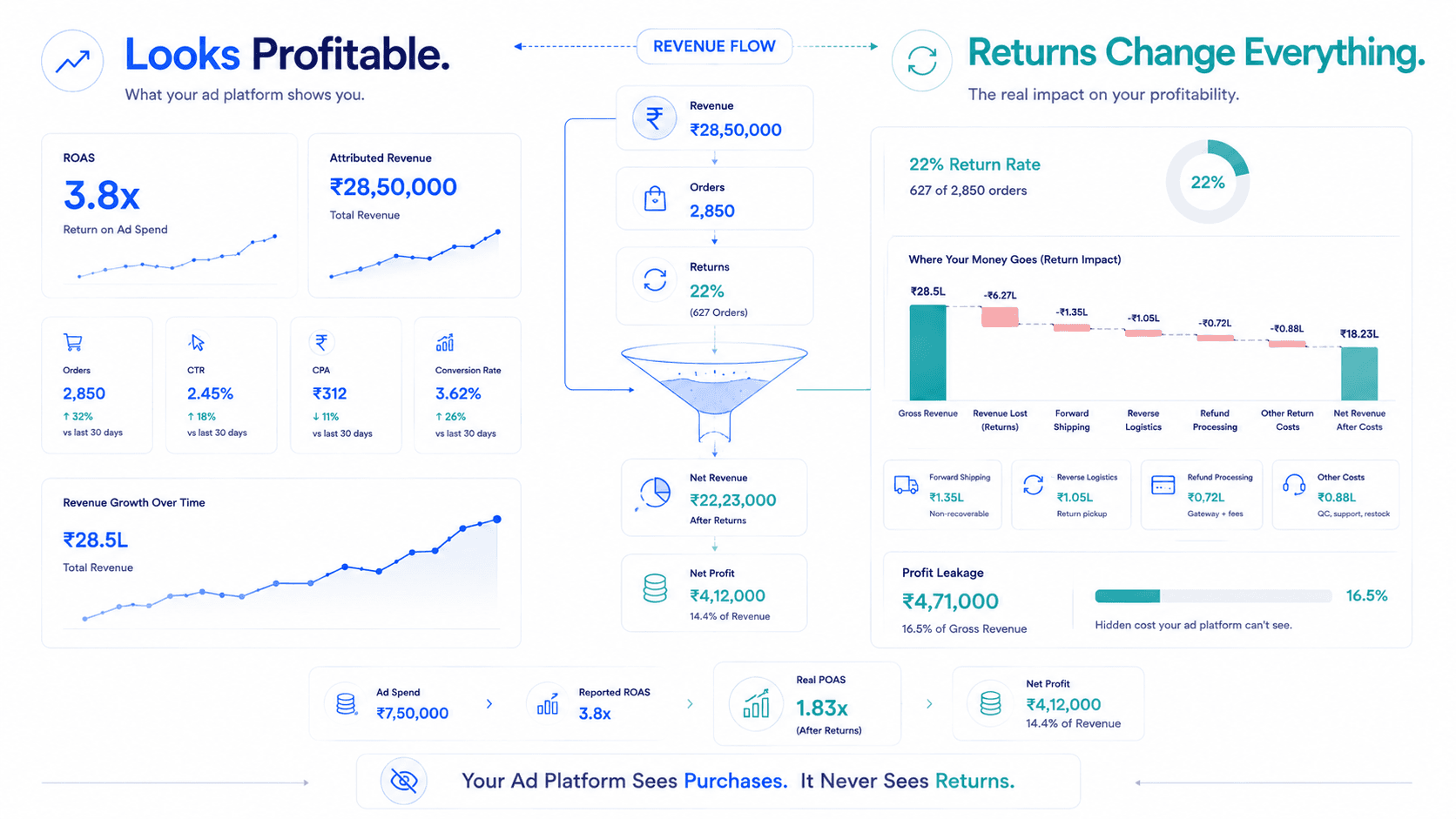
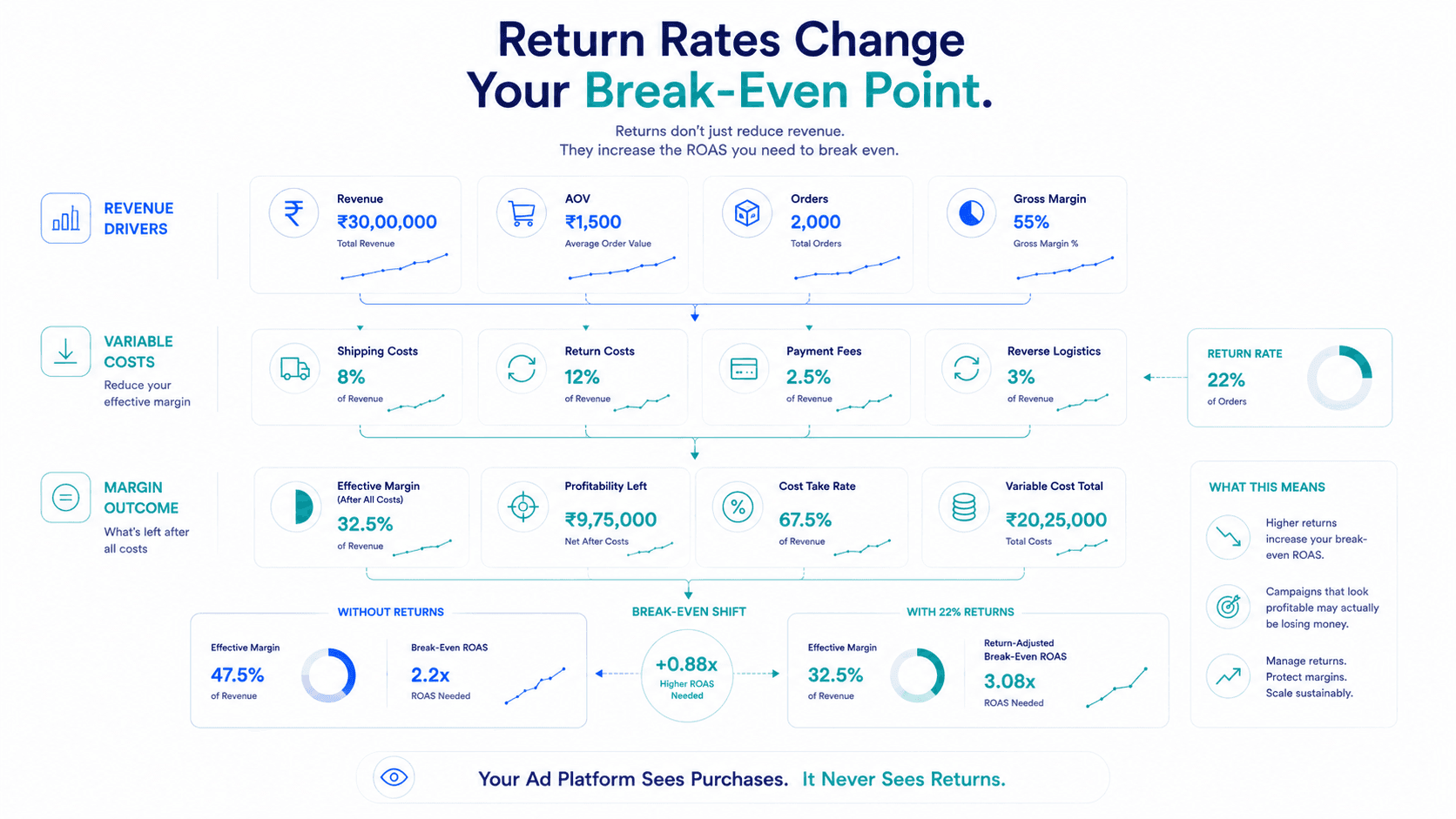
Somewhere in your Ads Manager, that campaign's ROAS is still sitting at 3.8x — completely unaware that 22% of the conversions it's celebrating have since come back through your returns portal.
This is the silent margin killer in D2C advertising. And almost nobody is measuring it at the campaign level.
Meta and Google report conversions at the time of purchase. They never update those numbers when a return happens. Your campaign ROAS is permanently inflated by every returned order it generated. The higher your return rate, the bigger the gap between reported performance and real performance.
The critical insight: return rates vary by campaign, not just by product. A discount-driven campaign may have a 25% return rate. A full-price brand campaign may have 5%. Applying a blended return rate to all campaigns gives you an inaccurate CM2 for each.
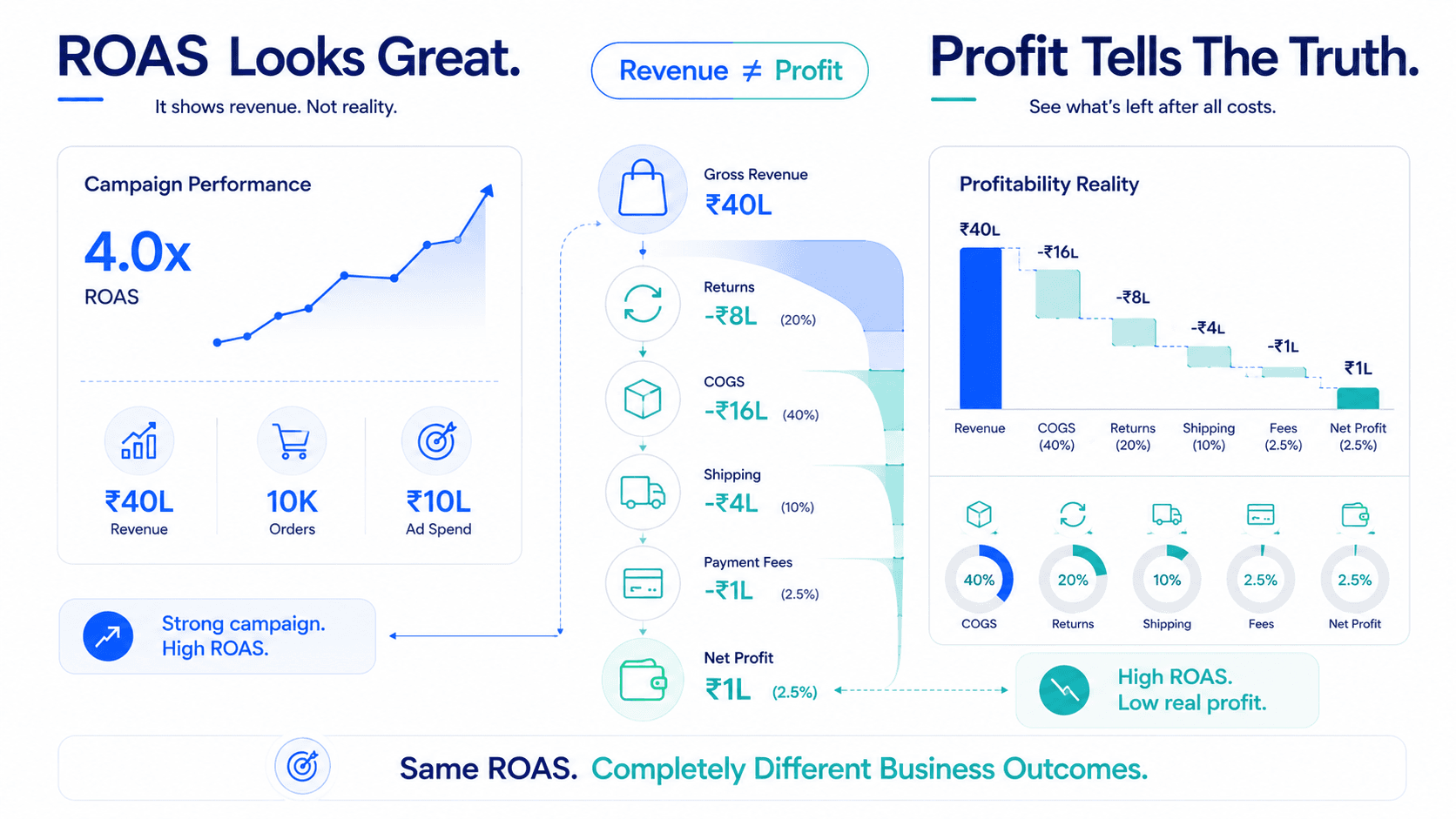
A 4x ROAS campaign with 25% returns can have lower real profitability than a 2.5x ROAS campaign with 5% returns. The ROAS number hides this completely.
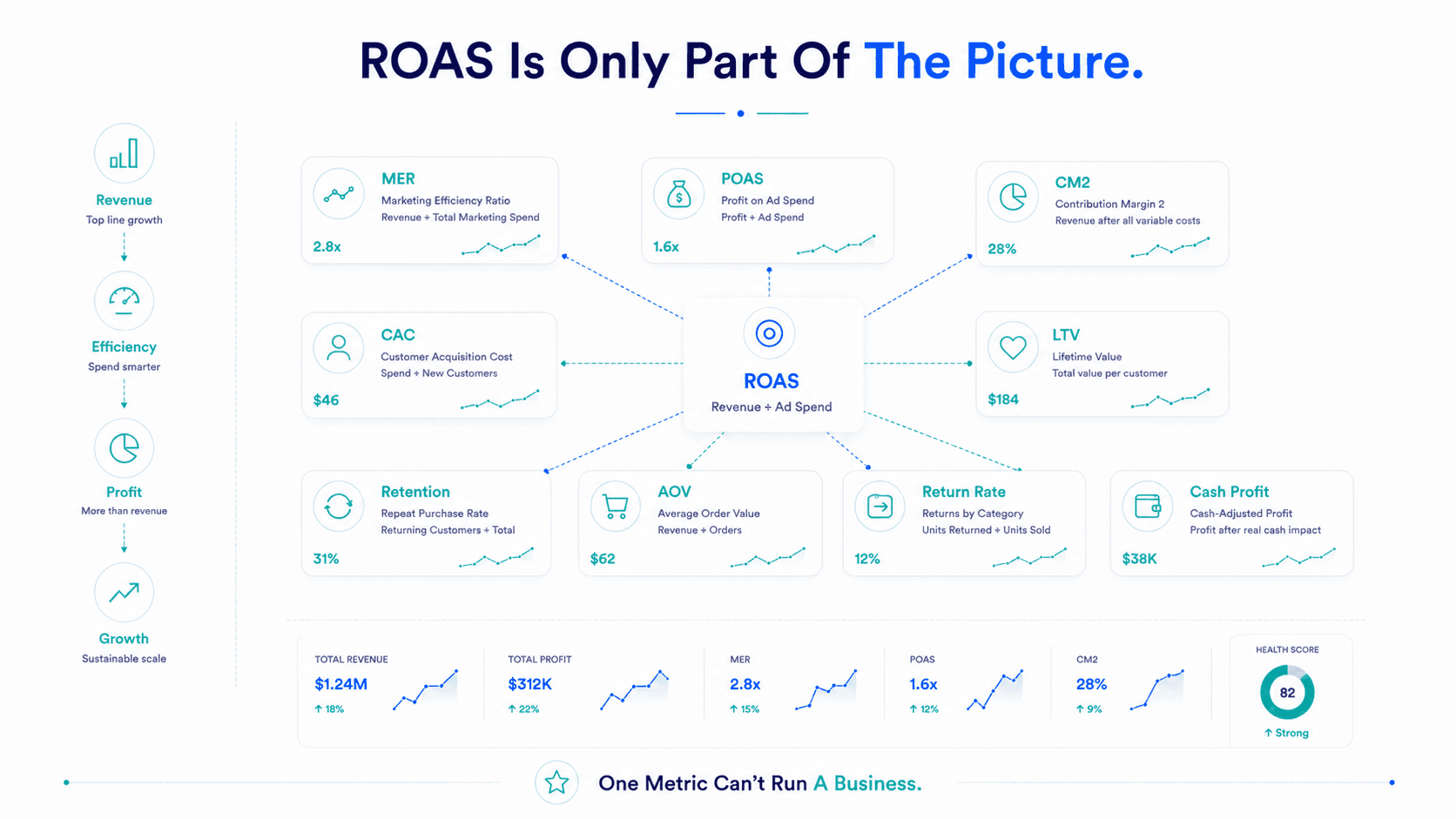
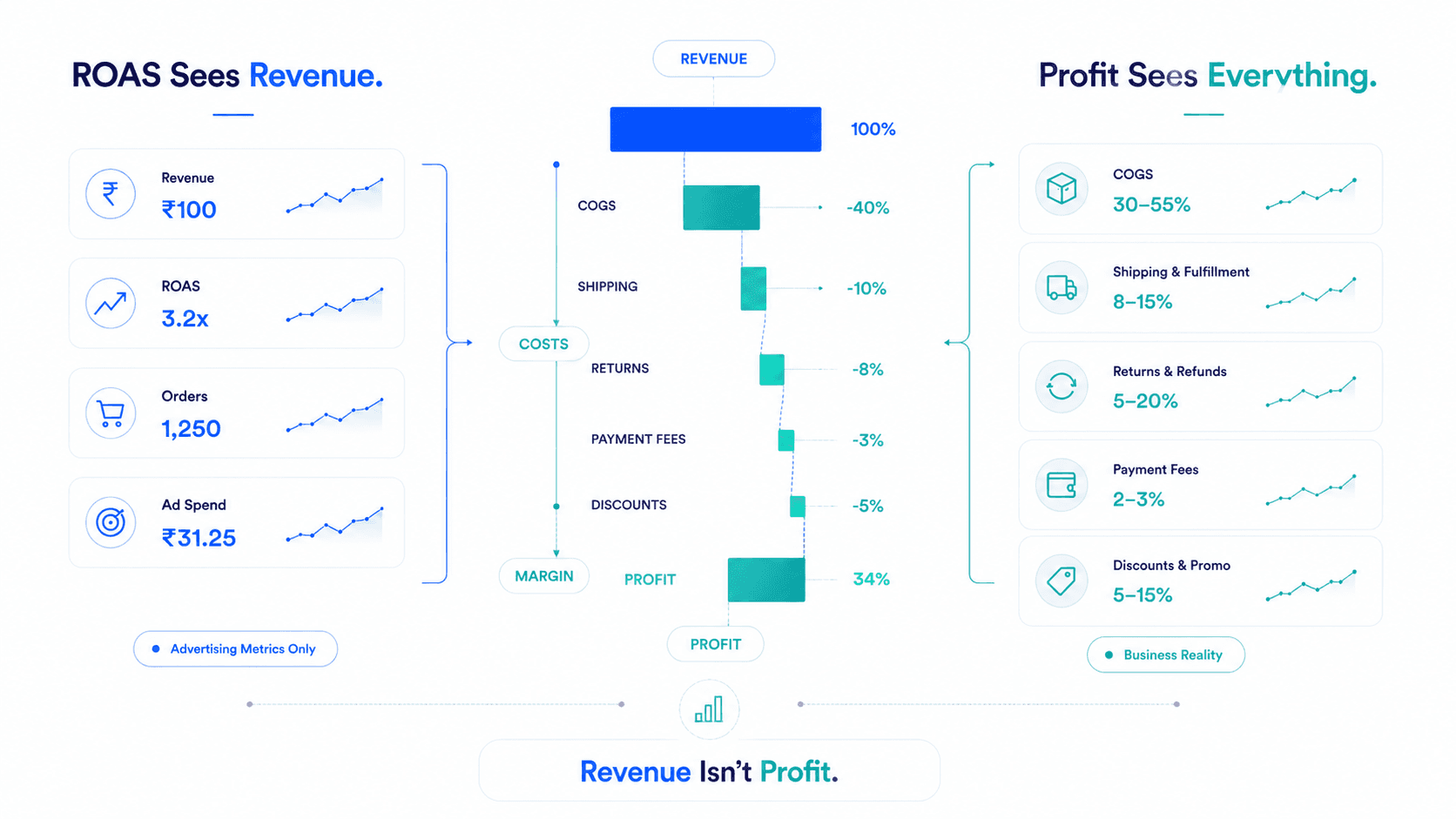
Returns are the invisible tax on D2C growth. Every campaign that looks profitable on ROAS may be losing money once returns are factored in. The brands that win are the ones measuring return-adjusted CM2 per campaign — not the ones celebrating inflated ROAS numbers that the returns portal has already disproved.
Frequently Asked Questions
Returns remove revenue but not ad spend. A campaign showing 3.8x ROAS with 22% returns is actually earning far less. The shipping cost, reverse logistics, and restocking fees compound the margin destruction.
It varies by category. Apparel: 15–25% is typical. Beauty: 5–10%. Electronics: 8–15%. The key is tracking return rates per campaign, not just per product.
Set accurate product expectations in ad creative. Use size guides, honest descriptions, and real product imagery. Campaigns targeting price-sensitive buyers with heavy discounts typically generate 2–3x higher return rates.
Yes. Flable connects your returns data to campaign attribution, showing return-adjusted CM2 per campaign — so you can see the real profitability impact of returns on each campaign.
Stop scaling on inflated ROAS. Flable shows the real number after returns.
Start Measuring Profitability →