Meta Ads
Meta Advantage+ Shopping Campaigns are the most significant structural change to D2C advertising on Meta in five years. Here's how to set them up correctly for profitable scaling.
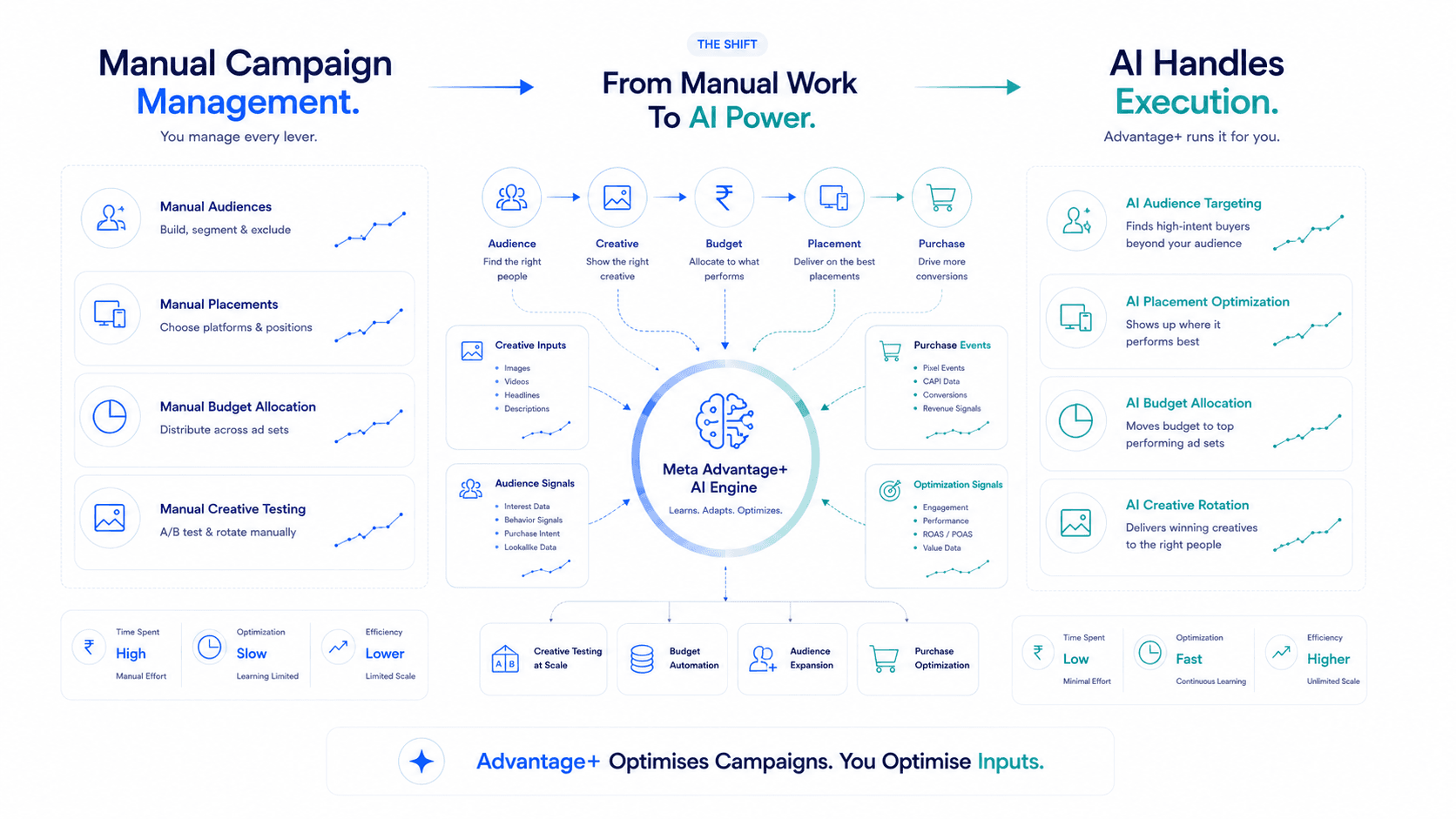
The old model: you build audiences manually, assign budgets across ad sets, A/B test creatives between defined segments. The new model: you give Meta's AI a budget, creative assets, and a conversion goal — and the algorithm handles targeting, placement, budget allocation, and creative rotation automatically.
In Ads Manager, select Sales objective → Advantage+ Shopping Campaign. Set your daily budget. Upload 5–15 creative assets (mix of static images, videos, and carousels). The algorithm will test and rotate these automatically.
This is the most important setting most brands miss. Set the existing customer budget cap to 10–15%. Without it, ASC will allocate 30–50% of budget toward retargeting existing customers — inflating ROAS with cheap conversions while starving new customer acquisition.
The customer budget cap is the difference between an ASC campaign that grows your business and one that just retargets people who already bought from you.
Highest Volume — maximises conversions regardless of cost. Good for initial testing. Cost Cap — sets the maximum cost per acquisition. Better for profitability. Minimum ROAS — the most POAS-aligned strategy. Translate your POAS target into a ROAS target and set it as your minimum.
ASC enters Learning Phase for 7–10 days. During this period: do not change budget significantly (more than 30%), do not pause and relaunch, do not switch bid strategy. ROAS will look weaker during Learning Phase — do not kill the campaign. The algorithm is calibrating.
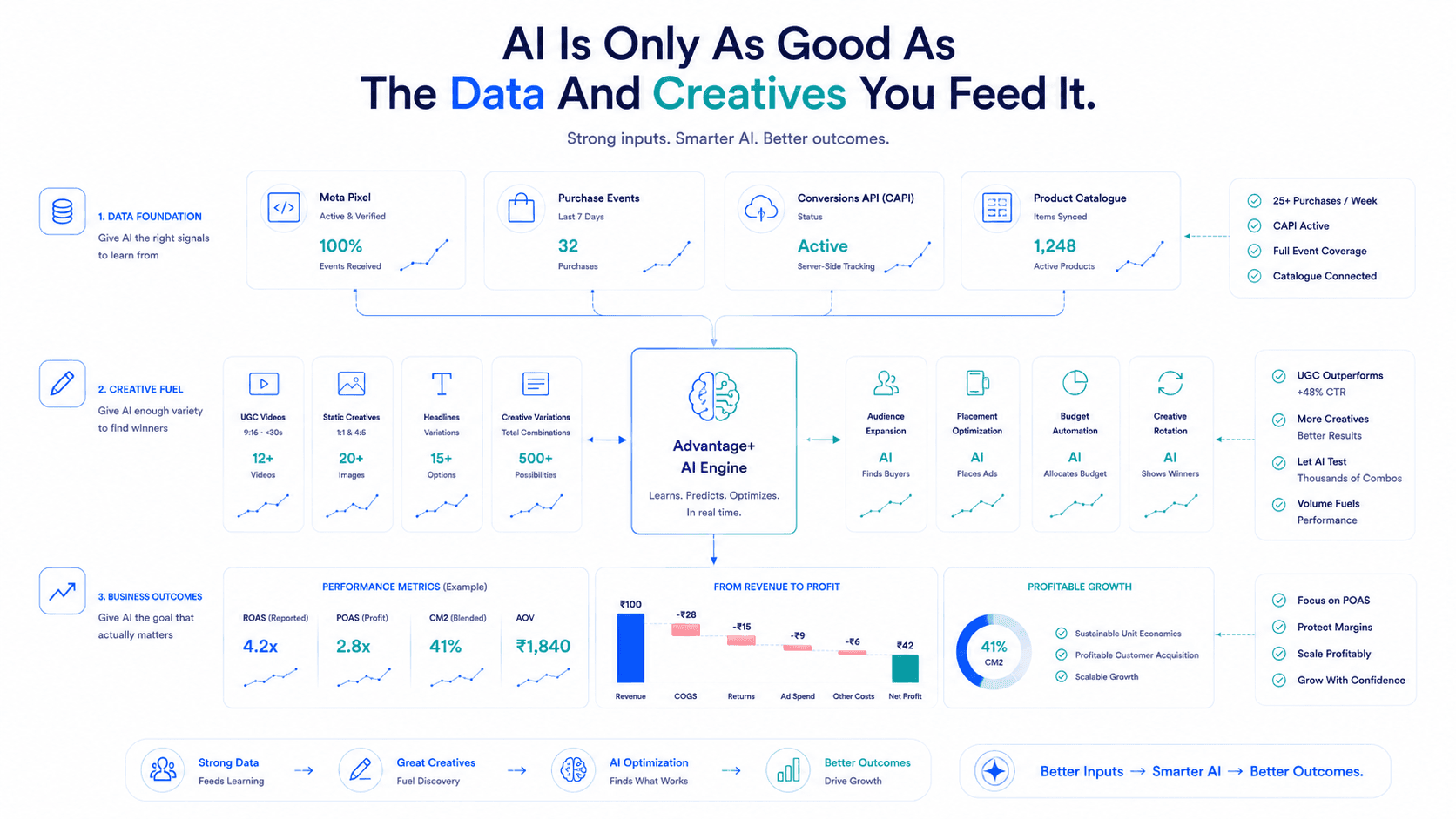
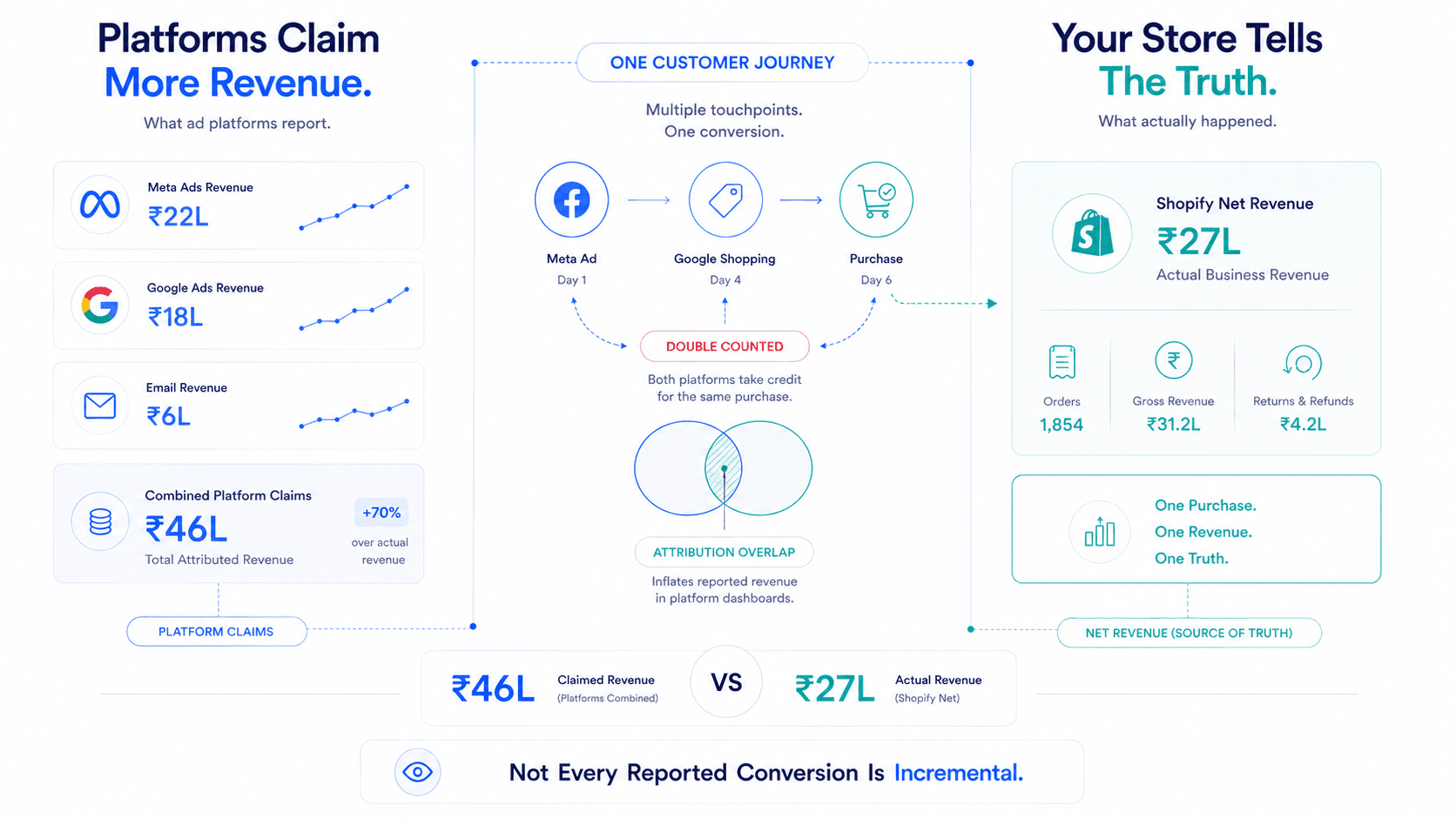
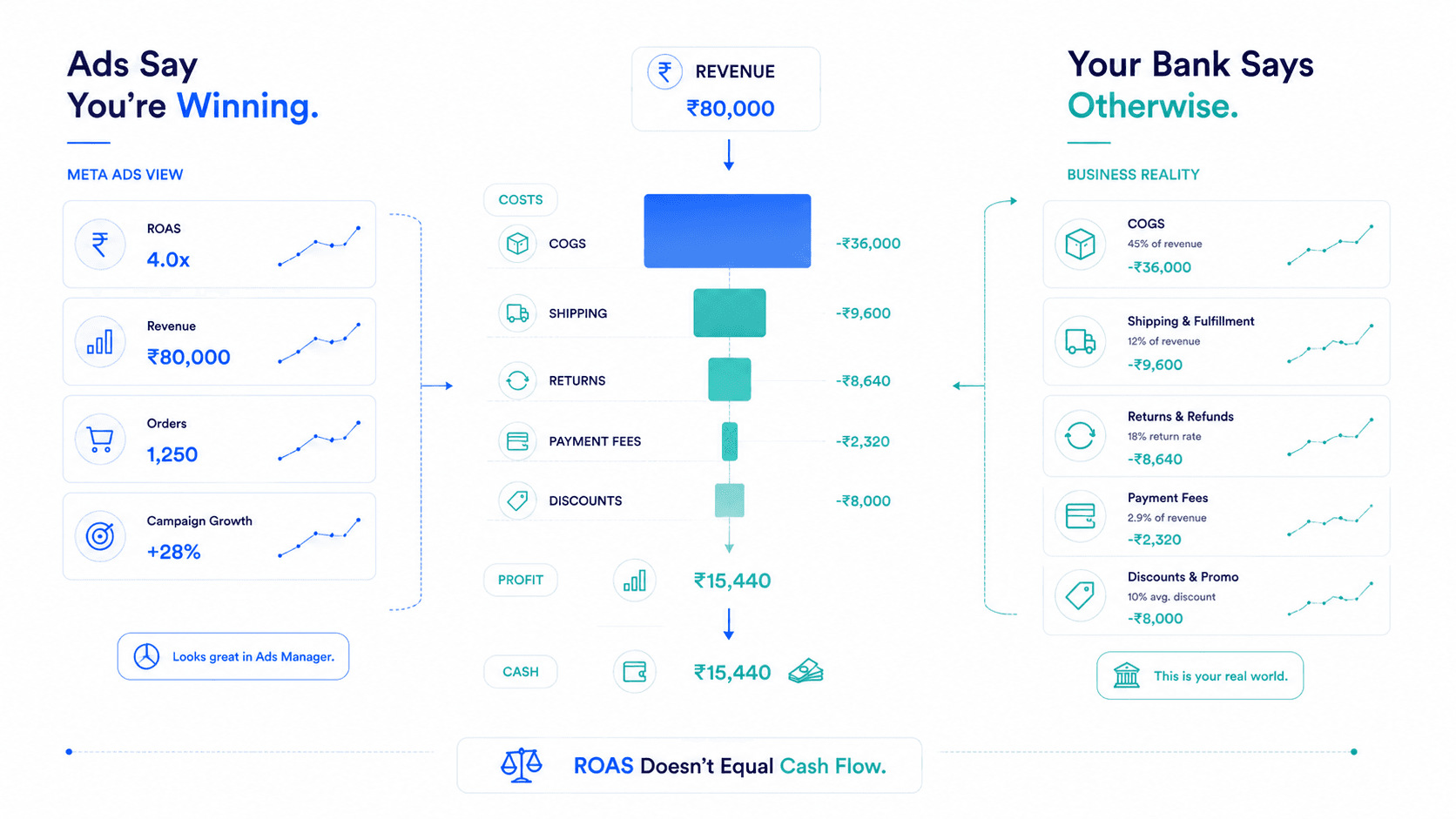
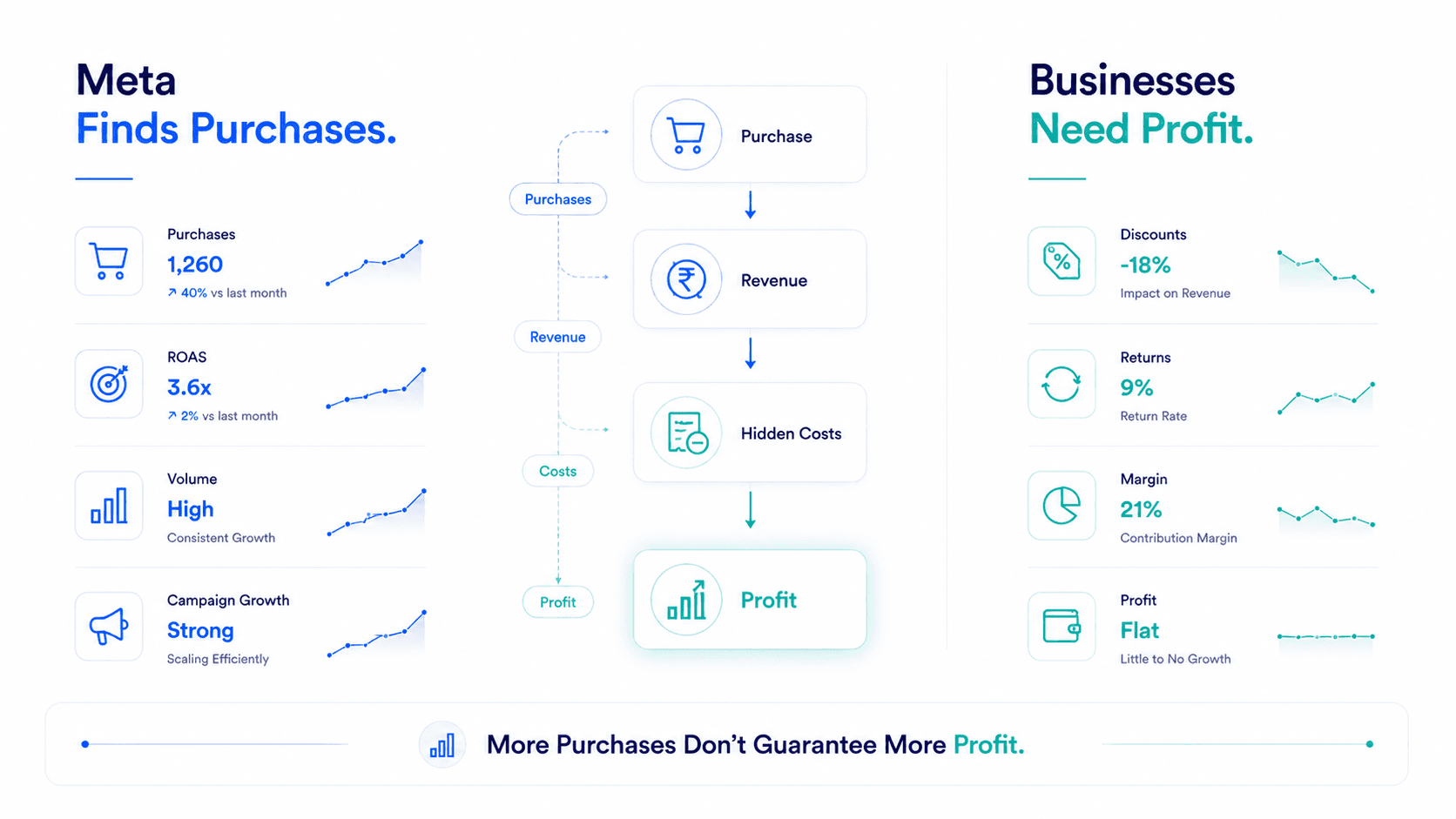
Meta's reported ROAS for ASC is systematically higher than real POAS because it doesn't account for returns, COGS, or retargeting overlap. The correct scaling signal is POAS calculated externally.
ASC amplifies winners aggressively, so creative fatigue arrives faster. Add 2–3 fresh assets every 2–3 weeks. Watch for declining CTR on top assets — typically happens 14–21 days after an asset becomes dominant.
Set it up correctly. Give the algorithm sufficient creative inputs. Configure your bid strategy around POAS targets, not volume. Use the customer budget cap. And measure performance externally on POAS and CM2. The algorithm is a powerful tool. It optimises for what you measure. Measure the right thing.
Frequently Asked Questions
ASC is Meta’s AI-powered shopping campaign type that automates audience targeting, budget allocation, and creative testing simultaneously. Unlike standard campaigns, ASC uses Meta’s algorithm to handle everything automatically — typically delivering 22% higher ROAS than manually managed campaigns.
A minimum of ₹5,000/day is recommended. Below ₹2,000/day, the algorithm struggles to generate sufficient purchase events to optimise effectively and may remain in Learning Phase indefinitely.
It limits the percentage of your ASC budget spent on existing customers. Without it, ASC may allocate 30–50% toward retargeting, inflating ROAS with cheap conversions while underinvesting in new customer acquisition. Set it at 10–15% for growth.
Typically 7–10 days. The campaign needs at least 25 purchase events within 7 days to exit. Do not make significant changes during this period — it resets the learning clock.
Flable calculates POAS and CM2 per ASC campaign by connecting your spend with Shopify revenue, returns, and COGS — giving you the profitability signal Meta’s dashboard cannot provide.
Real CM2 and POAS per ASC campaign, live, automatic, no spreadsheets.
Start Measuring ASC Profitability →