Seasonal Playbook
India’s festive season is the single biggest revenue opportunity in D2C.
It’s also the period when most D2C brands make their most expensive mistakes.
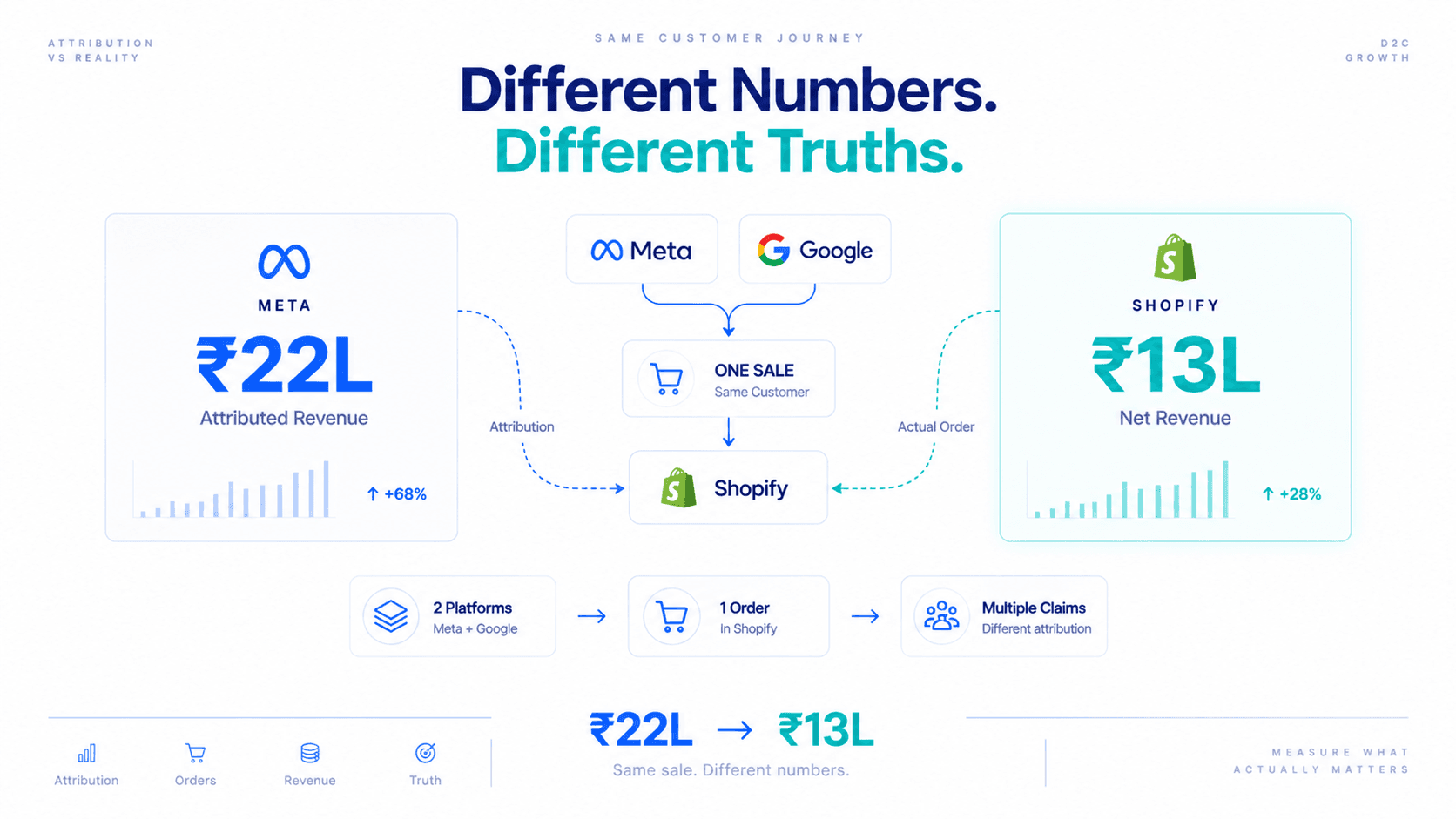
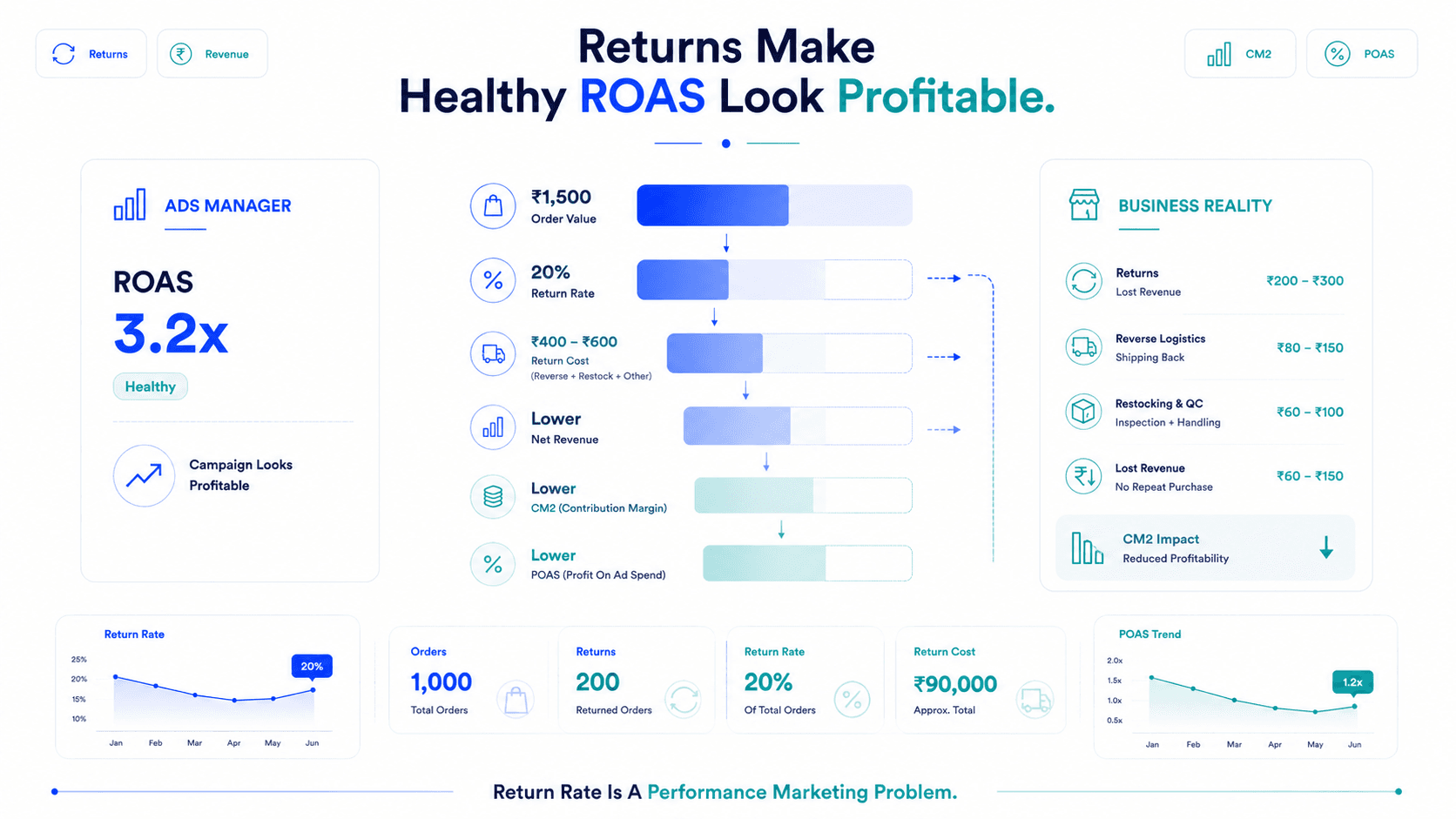
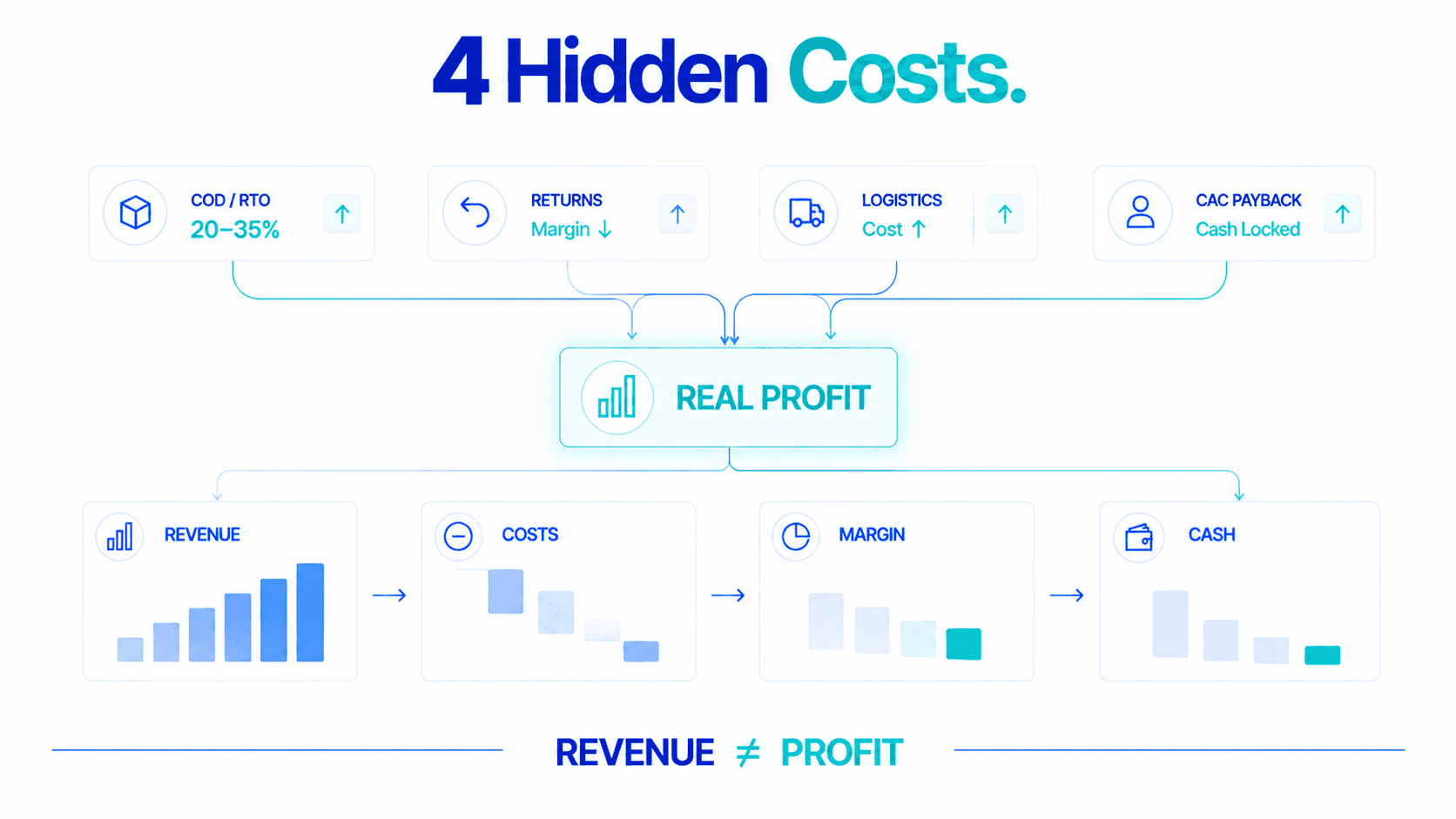
CPMs double. Return rates spike. Discount depths push brands below break-even. Agencies recommend scaling based on ROAS that looks strong because of volume, not because of margin.
The brands that emerge from festive season stronger than they entered don’t scale bigger. They scale smarter.
Here’s the playbook.
Before planning your festive campaign, run this calculation:
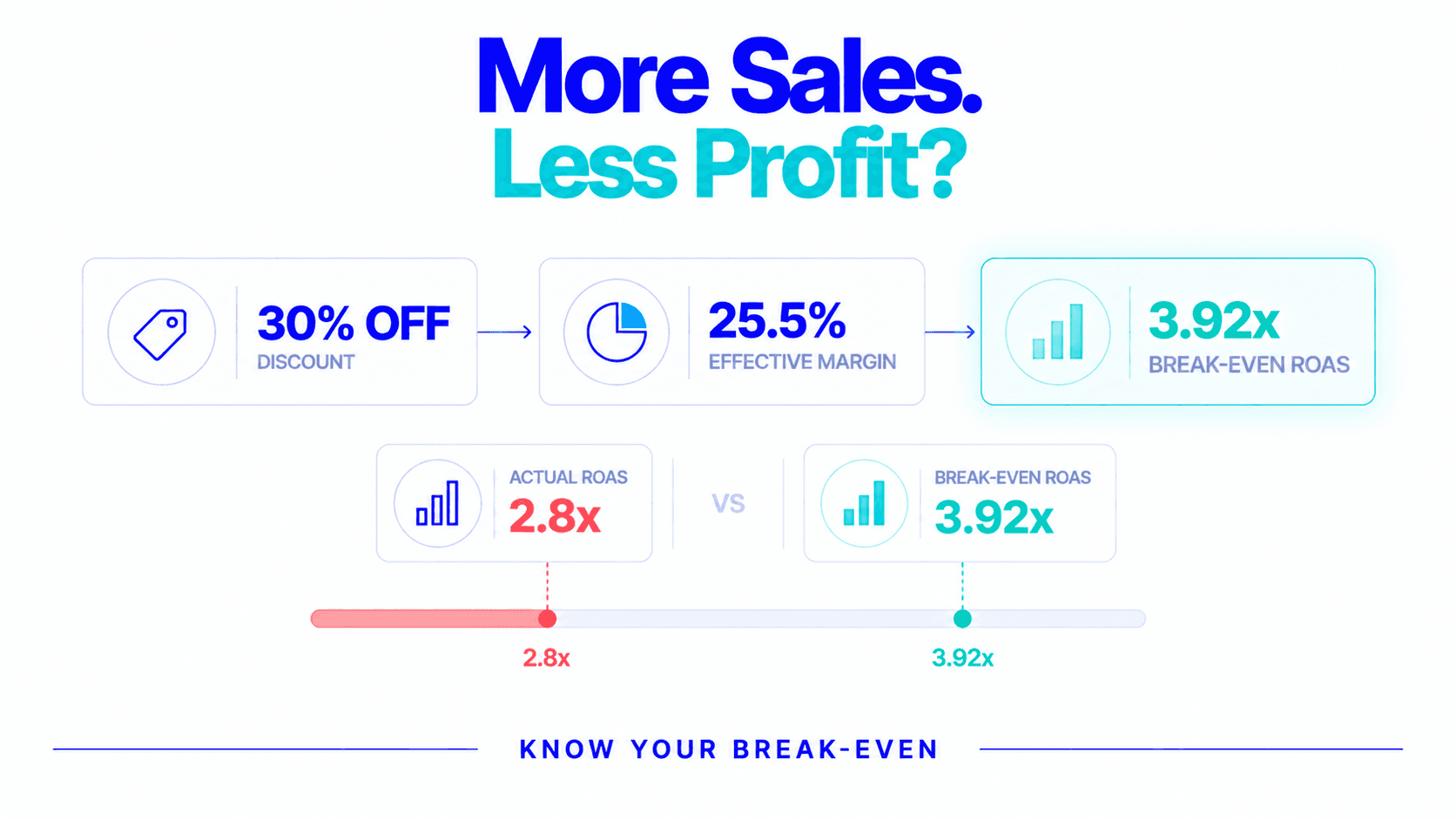
At your planned discount depth, what is your break-even ROAS?
Break-even ROAS = 1 ÷ Effective Margin % (at promotional price)
A skincare brand planning 25% off for Diwali
At 25% off, you need to sustain a 2.55x ROAS throughout the festive period to break even, after factoring in the higher return rate that festive season brings.
If your campaigns are returning 2.2x ROAS during the festive period (common as CPMs spike and audience quality dilutes at scale), you’re losing money on every order.
Run this calculation before setting your promotional depth. Not after.
Phase 1 · 6–8 weeks before
This is the most underinvested phase in most D2C festive strategies.
Build your retargeting pool, your email list, and your WhatsApp subscriber base before CPMs spike. Acquisition is significantly cheaper 6–8 weeks before the festive period than during it.
Build your warm audience pool before CPMs increase. Visitors who engage with your brand in September are cheaper to acquire than October/November visitors, and they convert better in your festive retargeting campaigns because they’ve had more time to consider.
“Join our Diwali VIP list for early access and exclusive offers”: capture emails and WhatsApp subscribers now, market to them at near-zero cost during the festive period.
Launch a review collection campaign now. Festive buyers are research-heavy: brands with 500+ recent reviews convert significantly better than brands with 50. Give yourself the review count you’ll need before the season starts.
The POAS implication: Pre-festive ROAS often looks modest, you’re building a warm audience, not converting them yet. Track MER across the full pre-festive + festive period, not just individual campaign ROAS.
Phase 2 · 2–3 weeks before main event
Convert your warm audience at reasonable CPMs before the peak spike.
CPMs start rising 2–3 weeks before major festive events. Early-festive buyers are high-intent: they’re planning purchases and researching. They’re also cheaper to reach than peak-week buyers.
Email and WhatsApp subscribers get the sale 48 hours early. This converts your warm list at a discount before CPMs peak, reducing your effective CAC on these customers.
Not everything needs to be discounted. Run your normal full-price campaigns for audiences who haven’t seen a sale yet, the early festive period often converts these audiences well as gifting intent rises even without a discount.
For every campaign launched during this phase, establish a minimum POAS below which you’ll pull spend. Don’t wait for the weekly review, set automated rules that reduce budget if CPA rises above your POAS break-even threshold.
Phase 3 · main event week
Maximise profitable conversion volume. Not all volume, profitable volume.
This is the week CPMs are highest, competition is most intense, and return rates are most elevated. The temptation is to scale everything. The right move is to scale selectively.
What to scale
What to cap or pause
The practical rule: Every 3 days during peak festive, pull your POAS per campaign.
< 0.9x
Immediately
0.9–1.1x
Diagnose
> 1.2x
Only these
Phase 4 · 2–4 weeks after
Manage the return wave while converting the audience you built.
The return wave
This is when your net revenue diverges most sharply from gross revenue. Manage cash flow accordingly, don’t scale new campaigns based on gross revenue that hasn’t netted down yet.
Re-engagement
Customers who browsed your brand during the festive season but didn’t buy, reached by your prospecting spend, are still warm. They know your brand. The festive urgency has passed. A post-festive offer (“New year, fresh start, 15% off until January 15th”) often converts this audience at moderate CPMs.
WhatsApp win-back
Customers who made a festive purchase and haven’t reordered within 30 days receive a repurchase nudge. The consumption window for products bought during Diwali often brings customers back in January, the right message at the right time converts effectively.
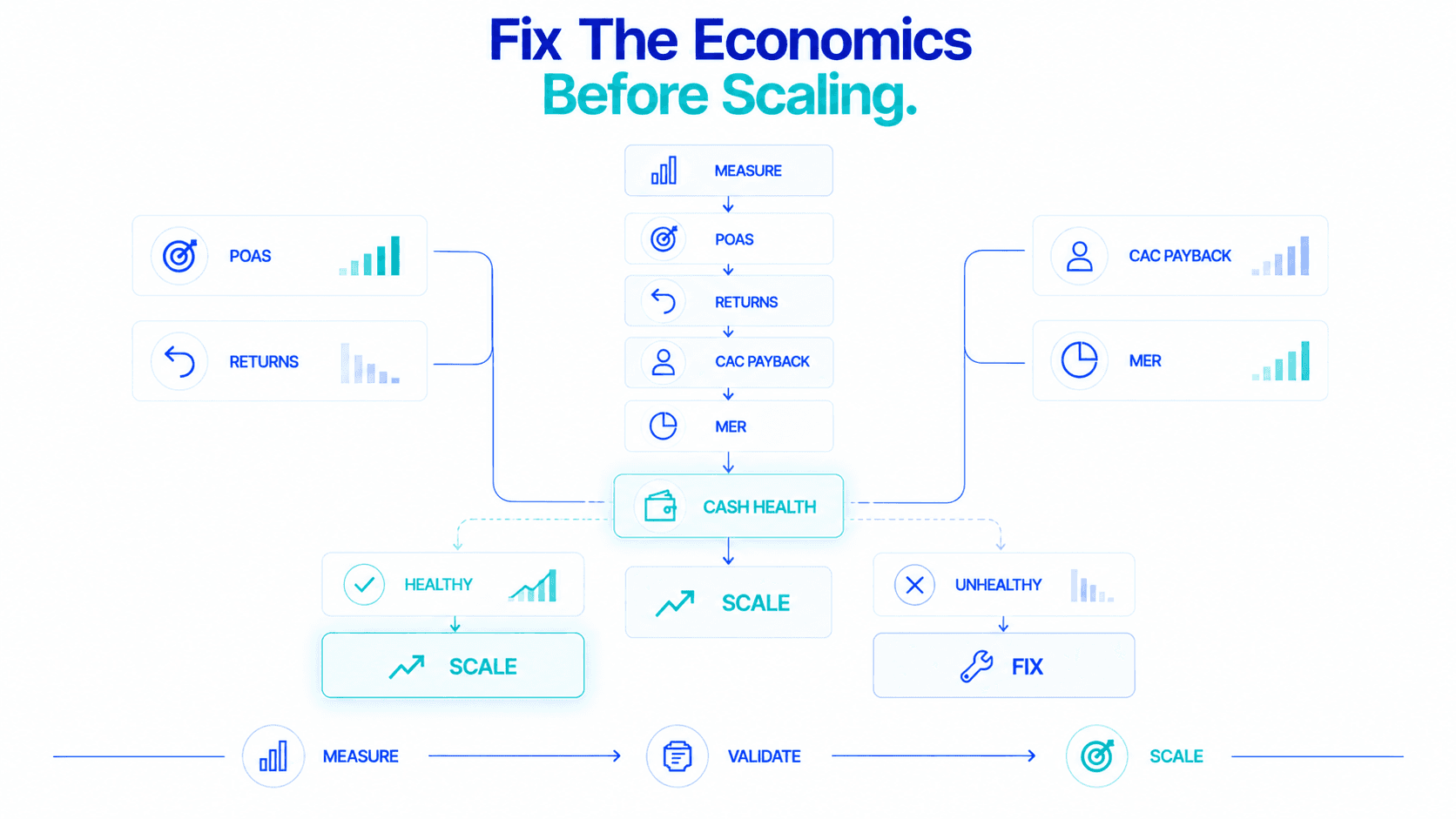
Don’t wait for the festive season to end to assess performance. Track these weekly throughout:
| Metric | What to watch |
|---|---|
| POAS per campaign | Any campaign below 1.0x gets reduced or paused |
| Return rate (weekly) | Rising above baseline = adjust creative or audience |
| MER | Declining MER during high-spend festive = scale is destroying efficiency |
| Net revenue vs gross revenue | Widening gap = return wave is arriving |
| New customer CAC (prospecting campaigns) | Rising = audience quality diluting at scale |
| Subscriber list growth | Pre-festive investment showing in list size |
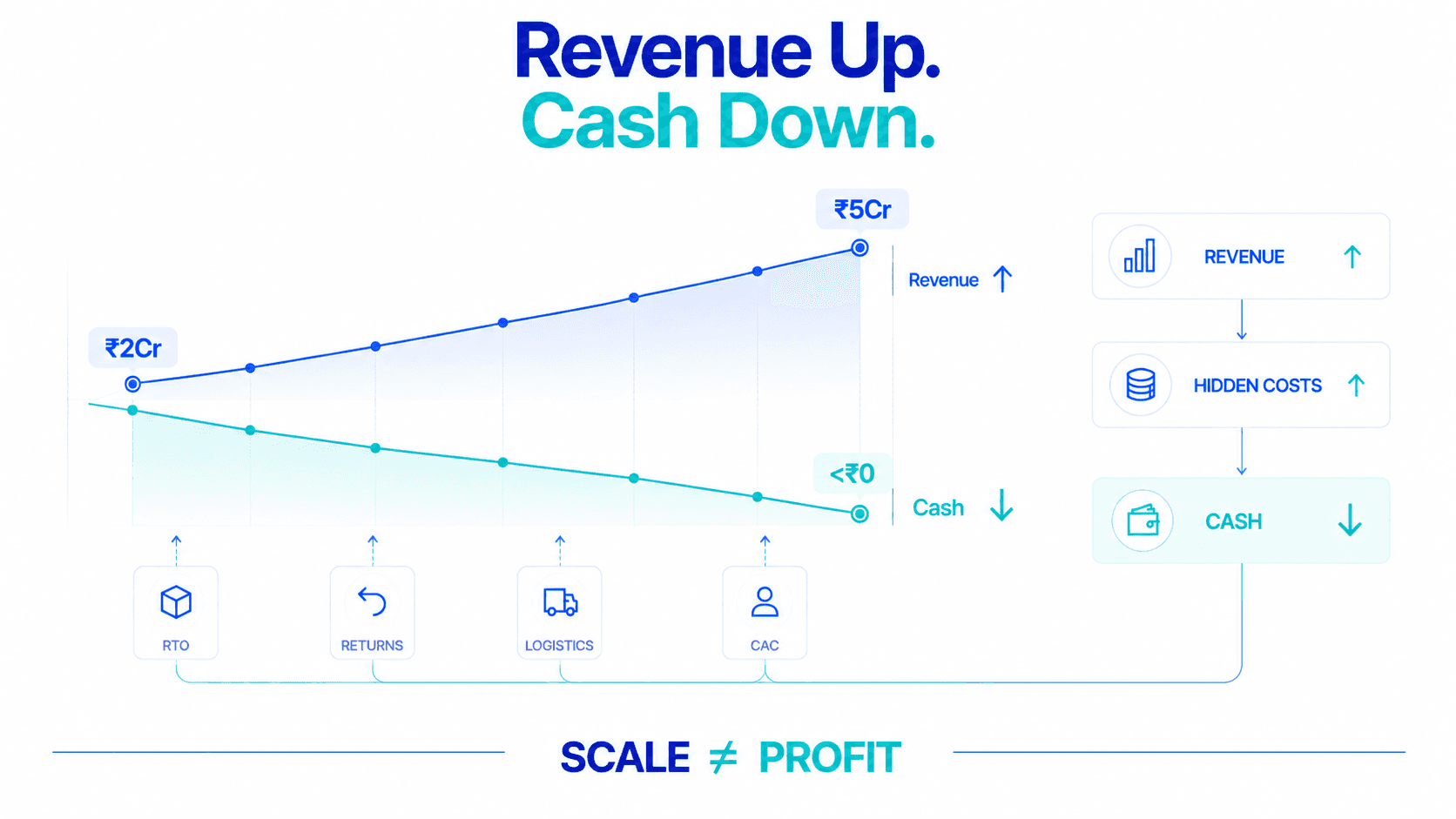
More revenue is not always better.
Festive season A
Festive season B
The brands that “win” festive season on revenue metrics often enter Q1 cash-flow constrained, carrying high return volumes, with customer lists full of discount hunters who won’t repurchase at full price.
The brands that scale profitably, with POAS above 1.2x throughout, controlled discount depths, and high-margin audiences prioritised, exit the festive period with stronger unit economics and a customer base worth more.
Scale the right revenue. Not all of it.
6–8 weeks before the main event. Pre-festive prospecting builds your retargeting pool at lower CPMs. The subscribers and warm audiences you build in this phase are your cheapest conversions during the peak festive window.
Calculate your break-even ROAS at the planned discount depth first. Most D2C brands can support 10–20% discounts while maintaining positive POAS. 25%+ discounts are viable only for high-margin products (above 60% CM1) where the promotional margin still exceeds break-even at realistic festive CPMs.
Every 3 days, pull POAS per campaign. Kill anything below 0.9x immediately, hold anything between 0.9x and 1.1x, and scale only campaigns above 1.2x.
Festive returns arrive 7–21 days after delivery, which is when net revenue diverges most sharply from gross revenue. Don't scale new campaigns based on gross revenue that hasn't netted down yet.
Flable tracks real-time POAS per campaign during the festive period, showing which campaigns are above break-even and which are destroying margin, before the weekly review cycle catches it. This allows immediate budget decisions during fast-moving festive campaigns.
Flable AI tracks real-time POAS per campaign through the festive period, so you can cut margin-destroying spend before the weekly review.