Comparison Guide
Back to Blog
Cluster Blog — June 20267 min read
How to Track Competitor Pricing and Offers: A Practical Framework
Creative tells you what story your competitors are telling. Pricing and offers tell you what they believe converts — the actual economic decision they're betting their margin on.
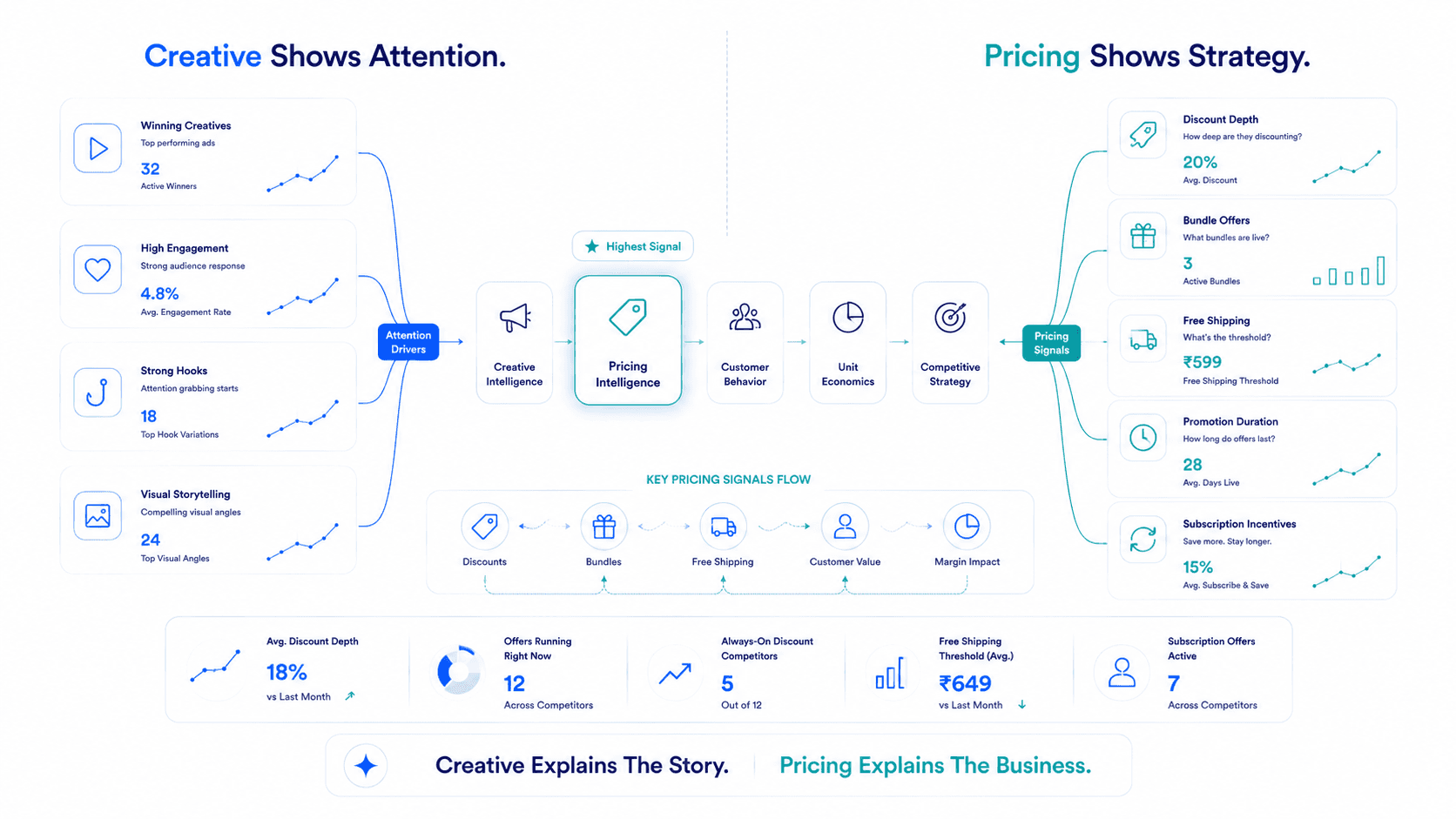
Most D2C brands track competitor creative obsessively and competitor pricing barely at all. That's backwards. A competitor's discount structure, bundle strategy, and promotional cadence reveal more about their unit economics and growth strategy than any ad creative ever will.
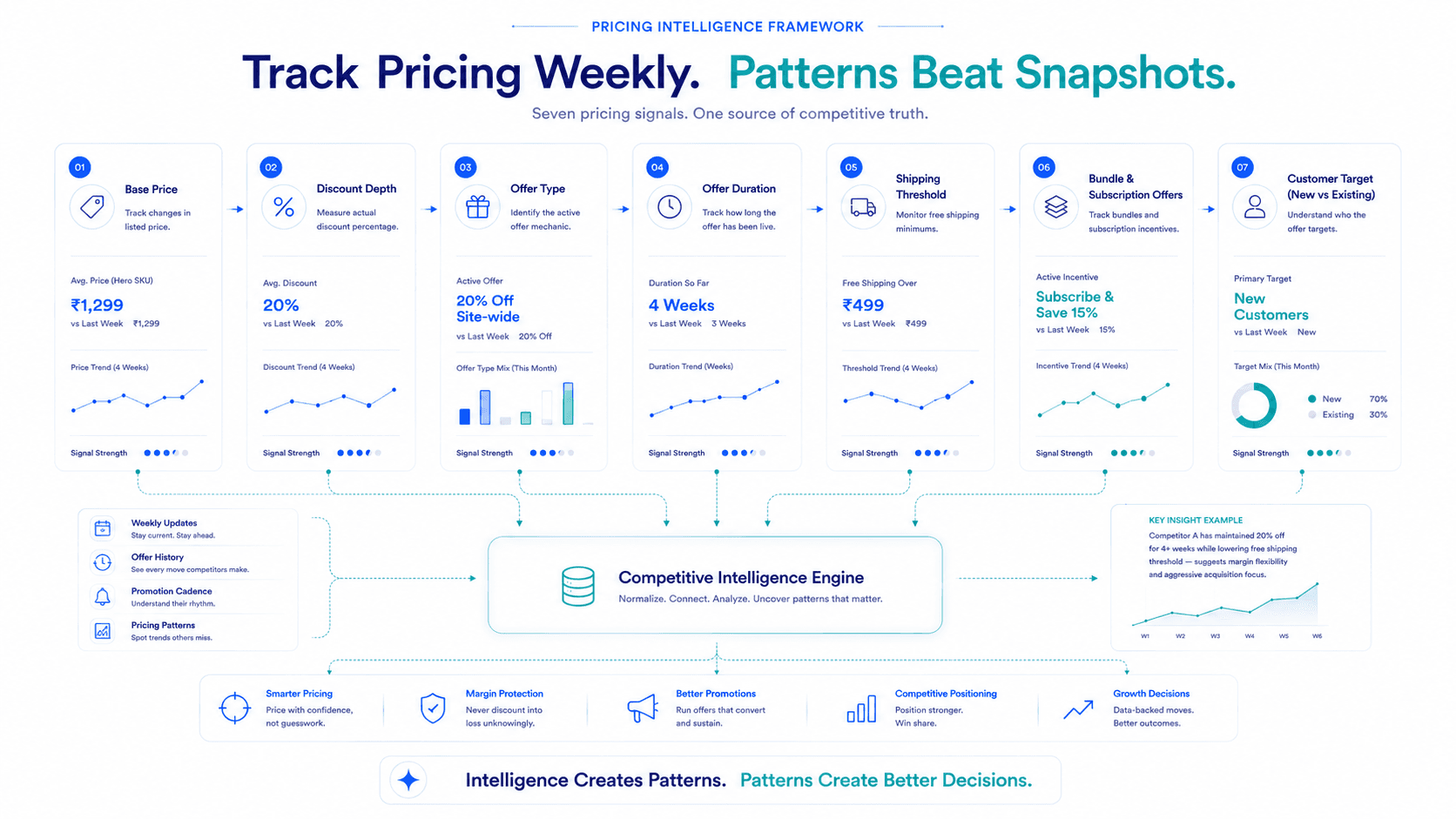
The 4 Pricing Layers You Must Track
- Listed Price (MSRP): The anchor. Changes rarely, but when it does, it signals a major shift in positioning or COGS reality.
- Net Effective Price: The price customers actually pay after the always-on "welcome" discount. For many brands, listed price is fiction. Net price is reality.
- Bundle Architecture: How they use pricing to drive AOV. Tracking the discount curve (buy 1 = full price, buy 2 = 15% off, buy 3 = 25% off) reveals their target AOV.
- The Shipping Threshold: The single most important pricing lever in D2C. Moving the free shipping threshold from ₹999 to ₹1499 forces customers to add a second item to cart.
Building the Tracking System
You don't need expensive scraping software. You need a structured weekly habit.
Pick 3 direct competitors. Every Monday morning, spend 15 minutes checking their Hero SKU price, current homepage offer, and shipping threshold. Log it in a simple spreadsheet.
What to Watch For (The Signals)
The Desperation DiscountA sudden 40%+ site-wide sale mid-month, outside normal retail holidays. They missed their revenue target or are clearing dead stock.
The Margin SqueezeThey raise the listed price but increase the standard discount, keeping net price the same but making the "deal" look better.
The AOV PushThey raise the free shipping threshold by ₹300–500. Usually indicates rising fulfilment costs they can no longer absorb.
The Bundle ShiftThey aggressively promote multi-packs over single units in their ad creative. They are optimising for CM2, not just volume.
How to React to Competitor Price Changes
When a competitor drops their price aggressively, the worst reaction is an immediate matching discount. Instead, look at your own CM1 and CM2. Can you afford to match? If not, shift your creative messaging to emphasize quality, or build a bundle that offers higher perceived value without destroying your unit margin.
Conclusion
Creative tells you what they want customers to feel. Pricing tells you what their P&L requires customers to do. Track it systematically. Build the spreadsheet. Update it weekly. You'll stop reacting to their ads and start anticipating their strategy.
Frequently Asked Questions
Why track competitor pricing instead of just their ad creative?
Creative tells you what story competitors are telling. Pricing tells you what they believe converts — the actual economic decision they're betting their margin on. A competitor's discount structure reveals more about their unit economics than any ad.
How often should D2C brands track competitor pricing?
Weekly for top 3 direct competitors. Monthly for the broader category (5–10 brands). This frequency catches weekend flash sales, mid-month bundle tests, and end-of-month revenue pushes.
What is the best way to track competitor discount strategies?
Monitor the 'implied discount' on their Hero SKUs. Subscribe to their email/SMS list and record every promotion code. Note the minimum order value (MOV) required to trigger free shipping or tiered discounts.
How do I build a competitor pricing dashboard?
Start simple. A spreadsheet with columns for Date, Brand, Hero SKU Listed Price, Current Promo, Net Price, Bundle Offer, and Shipping Threshold. Update it weekly. (See our companion guide on building this dashboard).
Respond to competitors without destroying your margin.
Flable shows your real CM2 live. Know exactly how much discount you can afford before you launch a counter-offer.
Track Your Real Margin →