Deep Dive
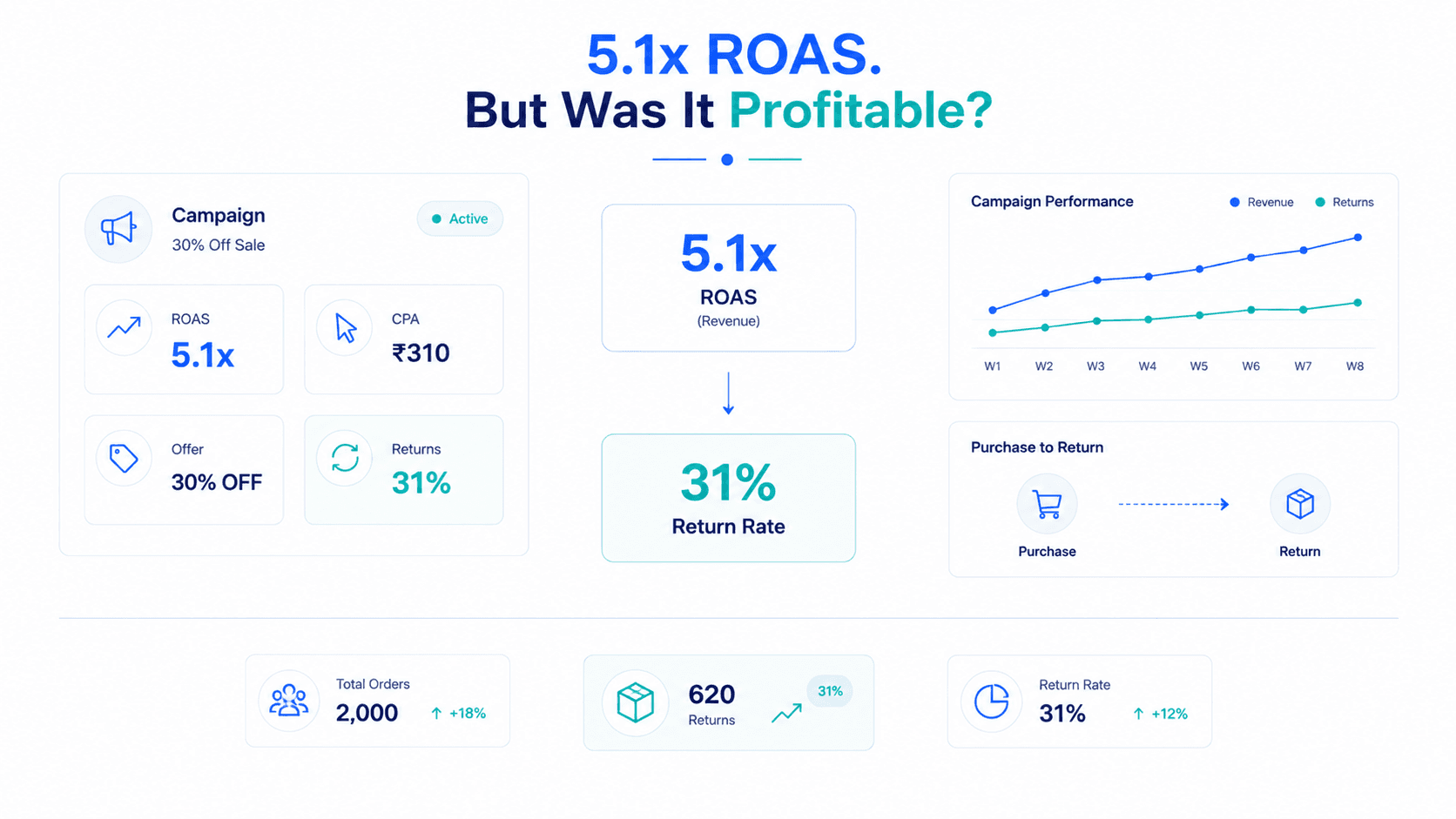
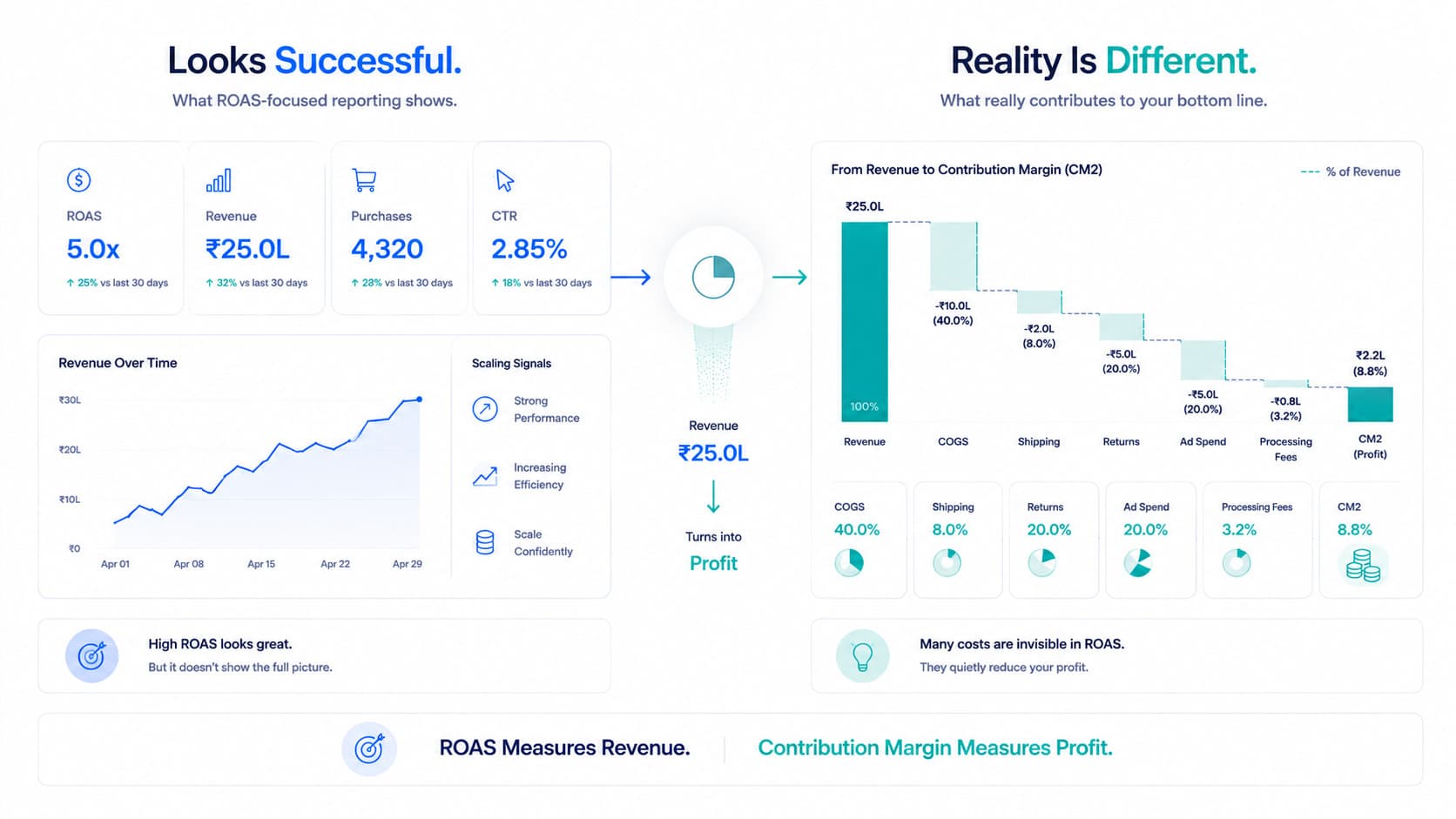
Every D2C founder knows their ROAS. Very few know their break-even ROAS. That gap between the number you're hitting and the number you need to hit to be profitable is where scaling decisions go wrong.
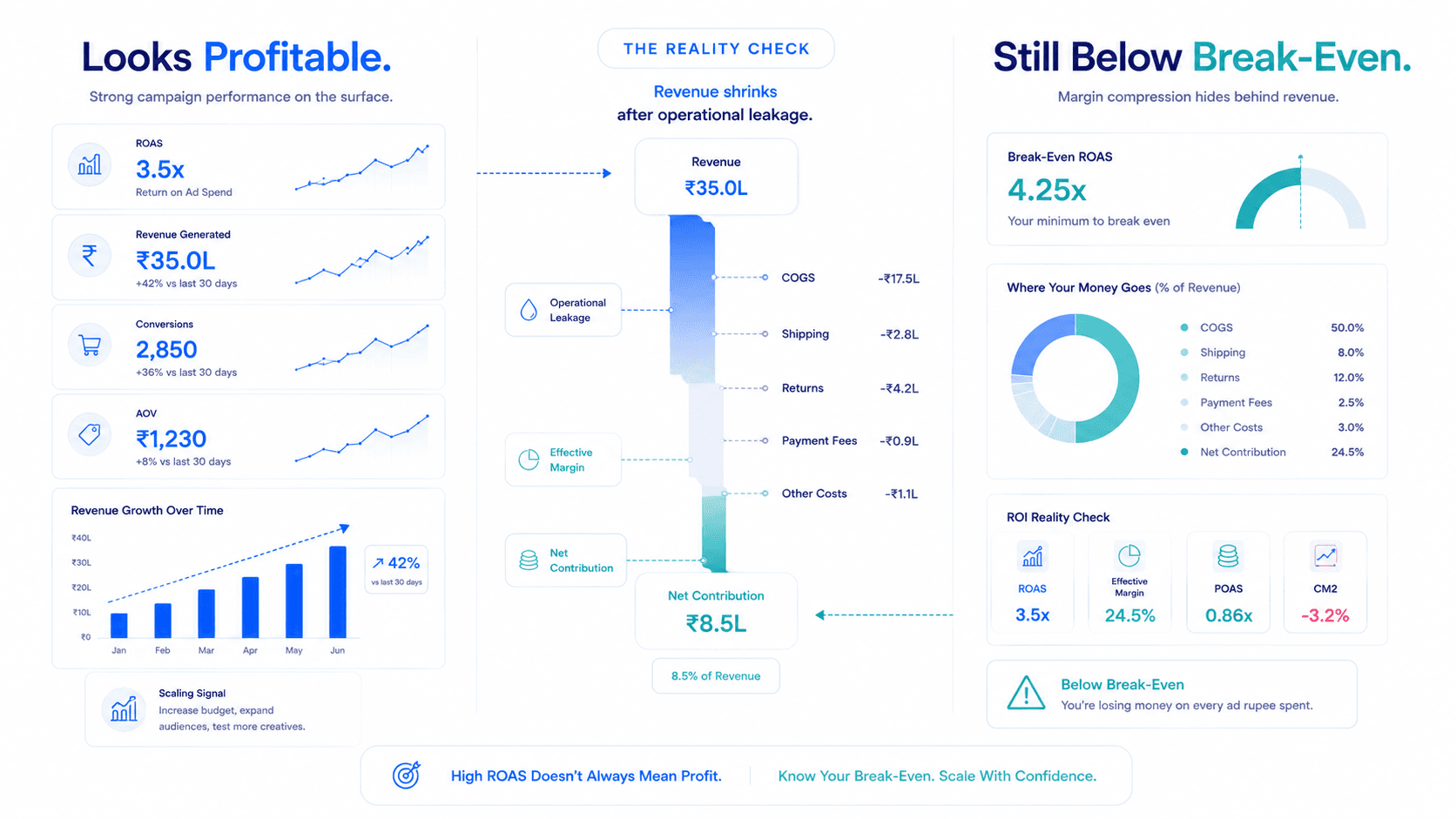
And in 2026, with average ecommerce ROAS sitting at 2.87x (down 4% year over year) and CPMs rising across every category, knowing your break-even number has become the most important calculation in performance marketing. This is how to calculate it, what it looks like by industry, and how to use it to make every budget decision sharper.
Break-even ROAS is the minimum return on ad spend you need to cover all variable costs associated with a sale and not lose money on advertising. It's the floor. Everything above it is profitable. Everything below it is a subsidy you're paying out of your margin.
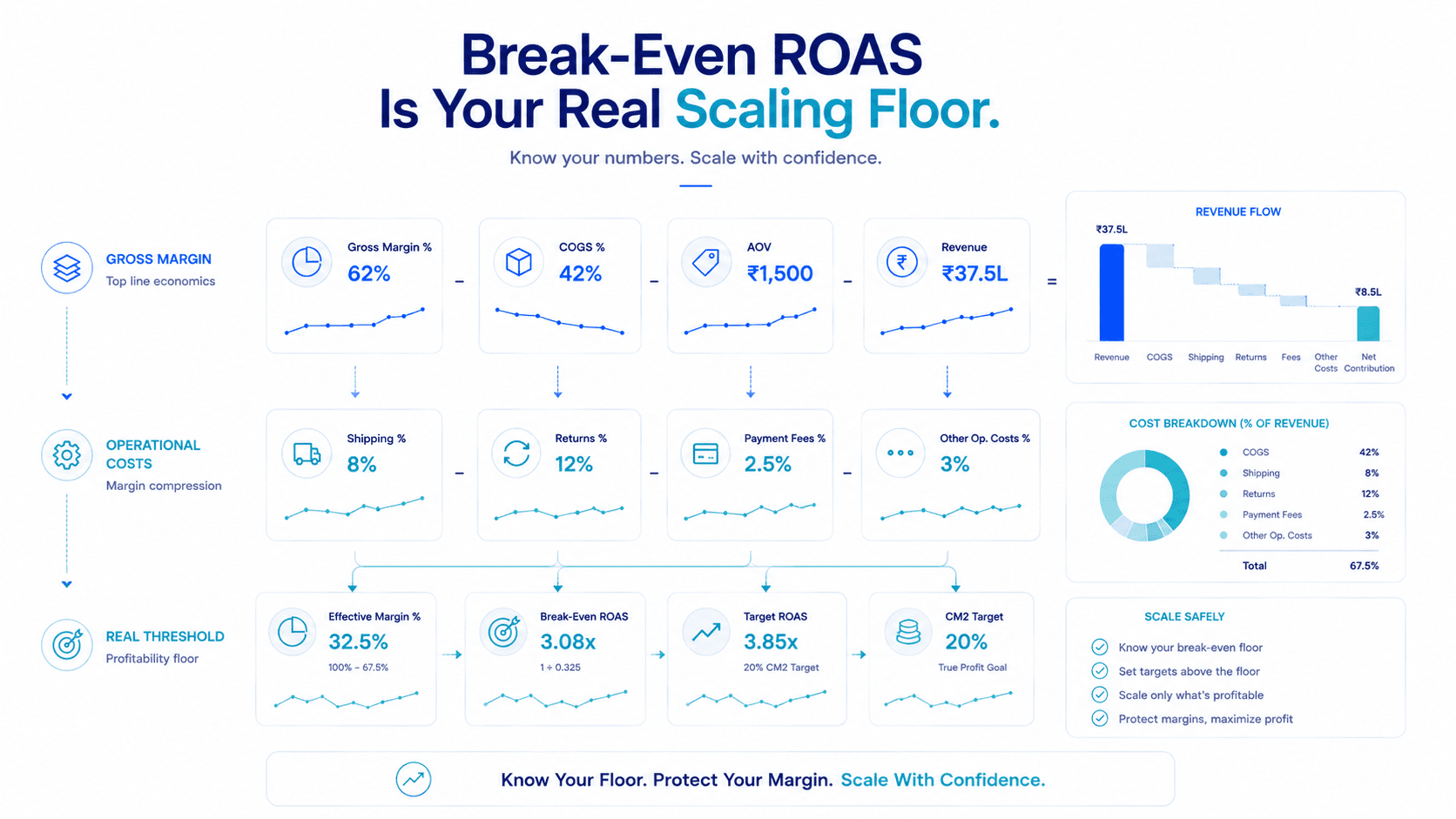
The basic formula: Break-Even ROAS = 1 ÷ Gross Margin %
So if your gross margin (after COGS but before marketing) is 40%, your break-even ROAS is 1 ÷ 0.40 = 2.5x. At 2.5x ROAS, you're exactly at breakeven on variable costs. Every rupee above 2.5x ROAS contributes to covering your fixed costs and generating profit.
But — and this is critical — the standard formula uses gross margin. Most D2C businesses have additional variable costs that the basic formula ignores: shipping, returns, payment processing.
Effective Margin % = Gross Margin % − Shipping % − Return Cost % − Payment Processing %
Real Break-Even ROAS = 1 ÷ Effective Margin %
Formula: 1 ÷ 0.465 = 2.15x
The basic formula would have given 1.61x. The real number is 2.15x — 33% higher. Running campaigns at 1.8x ROAS and thinking you're "close to breakeven" when your real threshold is 2.15x is how D2C brands bleed cash at scale.
| Category | Typical Gross Margin | Shipping % | Return Rate | Real Break-Even ROAS | 2026 Median Meta ROAS |
|---|---|---|---|---|---|
| Beauty / Skincare | 55–70% | 6–10% | 8–15% | 1.6–2.0x | 1.6–2.1x |
| Health / Supplements | 60–75% | 8–14% | 5–10% | 1.5–1.9x | 2.2–3.0x |
| Apparel / Fashion | 45–65% | 7–12% | 15–25% | 2.0–2.8x | 3.5–4.1x |
| Food & Beverage | 30–45% | 10–18% | 3–8% | 2.8–4.0x | 1.5–2.0x |
| Home & Garden | 35–50% | 8–15% | 6–12% | 2.4–3.2x | 2.1–2.5x |
| Baby Products | 40–55% | 7–12% | 8–14% | 2.1–2.8x | 3.8–4.4x |
| Electronics / Gadgets | 20–35% | 5–10% | 10–20% | 3.4–5.5x | 1.8–2.4x |
| Pet Supplies | 35–50% | 8–14% | 4–9% | 2.3–3.1x | 1.7–2.2x |
For Electronics: median Meta ROAS is 1.8–2.4x. Real break-even ROAS is 3.4–5.5x. The entire category is frequently operating below break-even on Meta ads.
For Food & Beverage: median Meta ROAS is 1.5–2.0x. Real break-even ROAS is 2.8–4.0x. Most F&B D2C brands cannot achieve profitable first-order acquisition on Meta which means LTV must carry the unit economics.
Return rates are the variable most D2C brands underestimate. A fashion brand's return rate of 20% doesn't just reduce revenue by 20%. It adds cost: forward shipping, reverse logistics (₹80–150 per return), restocking or quality check processing, and potential product damage.
At an 11.8x break-even ROAS threshold, a fashion brand at any realistic ROAS level may not be breaking even on first-order acquisition without very high LTV.
When you know your real break-even, scaling decisions stop being instinctual and start being mathematical. This is exactly what Flable AI calculates for you live, so you scale what's profitable and kill what isn't.
Frequently Asked Questions
Basic formula: 1 ÷ Gross Margin %. Full D2C formula: 1 ÷ (Gross Margin % − Shipping % − Return Cost % − Payment Processing %). The full formula accounts for all variable costs and gives you your real break-even threshold which is typically 20–40% higher than the basic gross margin formula suggests.
It varies significantly by category. Beauty and supplements brands typically have break-even ROAS of 1.5–2.0x due to high gross margins. Apparel brands range 2.0–2.8x depending on return rates. Electronics can be as high as 3.4–5.5x which explains why many electronics D2C brands struggle to be profitable on paid acquisition alone.
A discount directly reduces your gross margin if you offer 20% off, your gross margin drops by approximately the same amount. Your break-even ROAS must be recalculated for every promotional period. A campaign that was profitable at regular price may be loss-making at promotional pricing if you're running the same bid strategy.
Break-even ROAS is the floor the point at which you're covering variable costs without profit. Target ROAS is higher it builds in your required contribution margin above breakeven. If you need 20% CM2 to cover fixed costs and generate profit, your target ROAS should be set above your break-even accordingly.
Flable calculates real CM2 per campaign including COGS, returns, and shipping so you can see exactly how each campaign's actual profitability compares to your break-even threshold. You don't need to manually reconcile data across systems. The break-even-vs-actual comparison is live, automatic, and updated in real time.
Real CM2 per campaign — live, automatic, compared to your actual break-even threshold.
Start Measuring Profitability →