Dashboard & Analytics
Competitor research without a system is just a series of one-off observations that evaporate the moment the tab closes. Here is how to fix it.
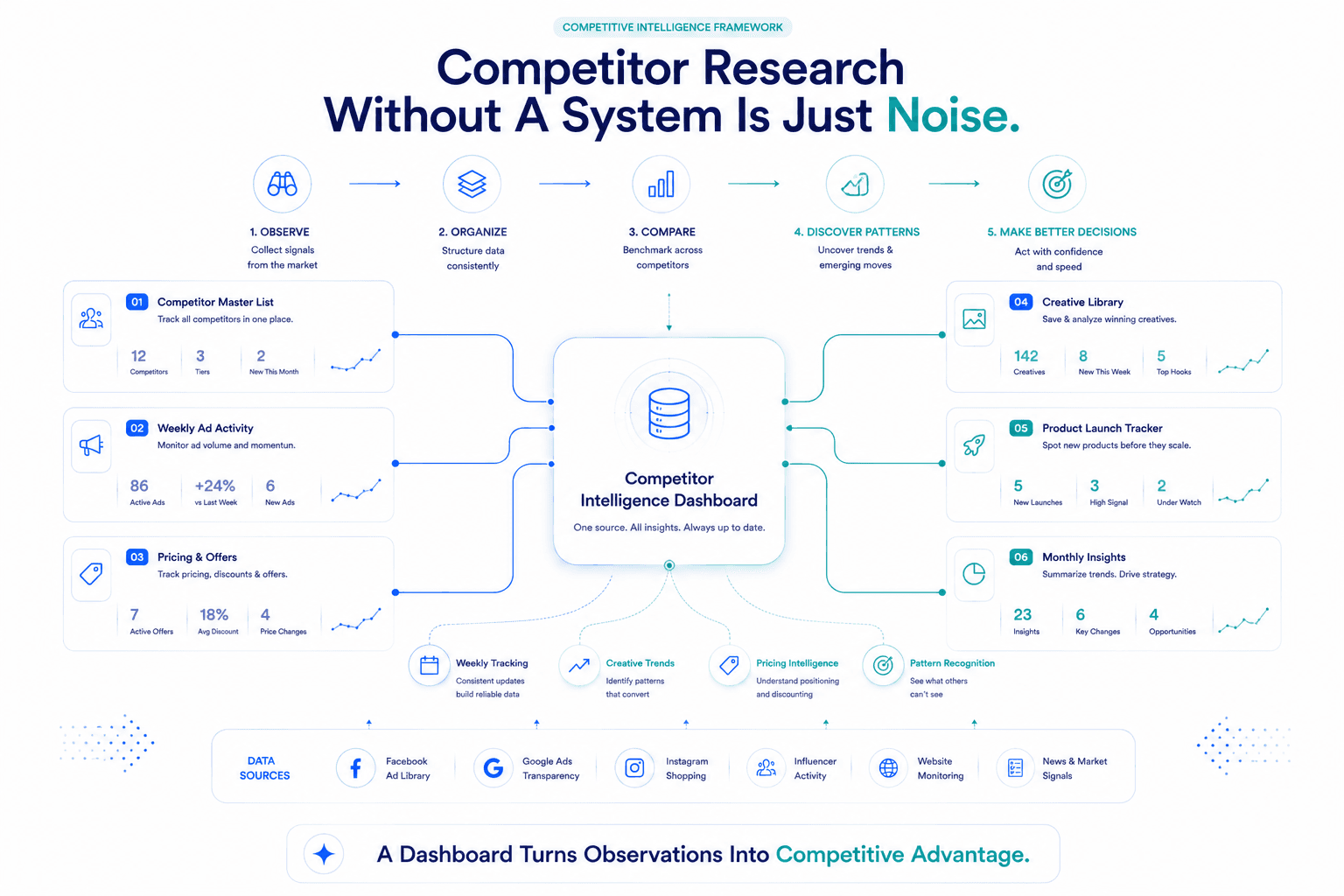
You see something interesting on the Ad Library. You mention it in Slack. Two weeks later, nobody remembers it, and the insight that could have informed your next creative brief is gone. A competitor intelligence dashboard fixes this. It's a structured system that turns scattered observations into a living, searchable database that compounds in value over time.
A functional dashboard needs to track four distinct areas of competitor activity:
Don't overcomplicate the tooling. A shared Notion database or Google Sheet is sufficient. Create columns for: Date Logged, Competitor Name, Category (Creative/Pricing/UX/Product), Observation/Screenshot, and "Why It Matters" (the strategic takeaway).
The most important column is "Why It Matters." If you can't articulate what strategic insight the observation provides, don't log it. Don't turn your dashboard into a digital hoarding ground.
A dashboard is only as good as its update frequency. Assign ownership to one specific person (typically a Growth Manager or Creative Strategist). Schedule 30 minutes every Monday morning to review the top 3 competitors in the Ad Library and on their site, logging any changes. 15 minutes of disciplined, structured logging beats 3 hours of ad-hoc browsing.
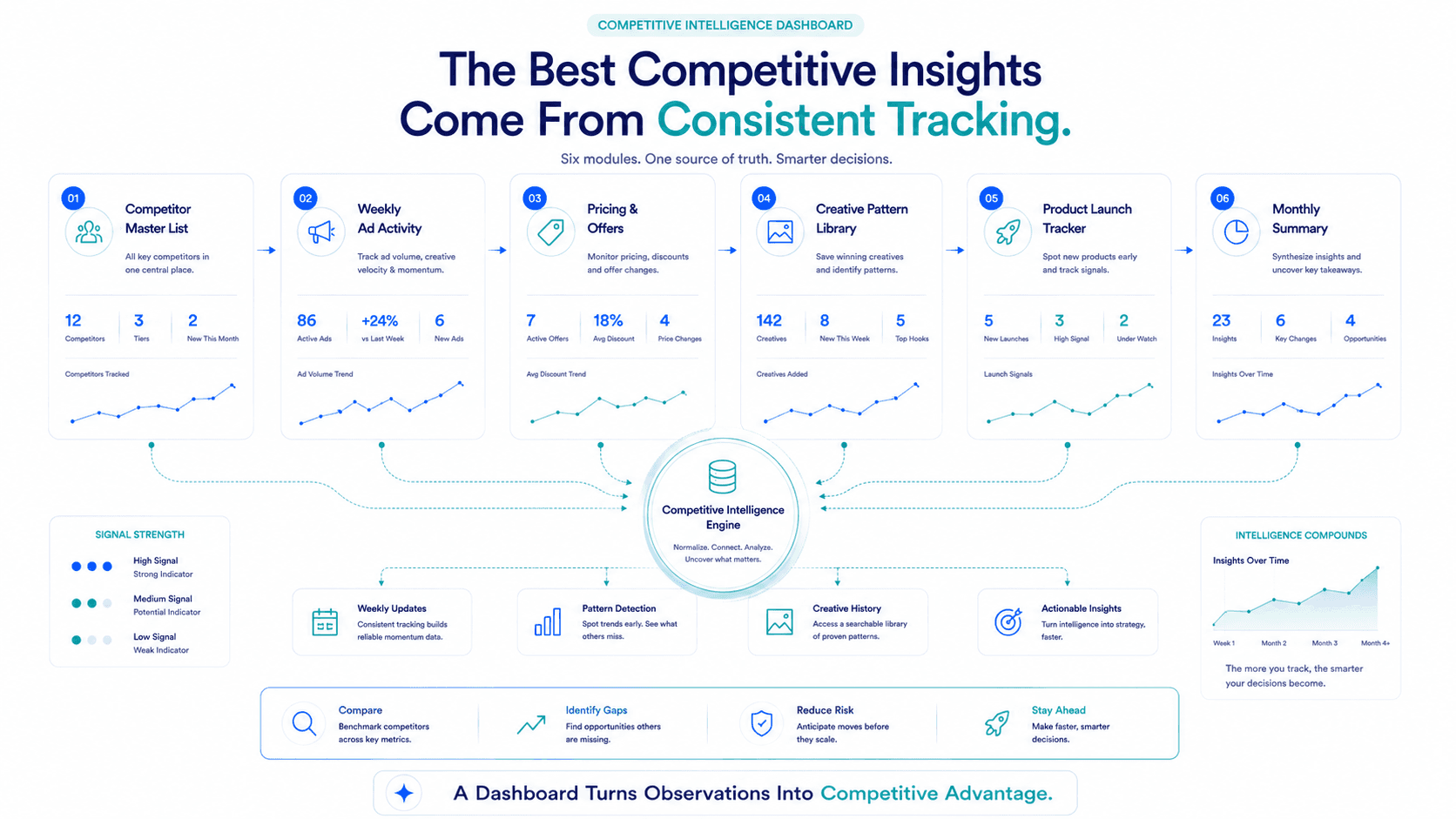
Review the dashboard formally once a month during your creative planning meeting. Look for patterns: Are all competitors shifting to founder-led UGC? Have shipping thresholds increased across the category? Use these validated patterns to brief your creative team and inform your own pricing strategy.
Intelligence is not the act of observing; it is the act of organising observations so they drive better decisions. Build the dashboard. Update it weekly. Review it monthly. It will become the most valuable non-financial asset your growth team owns.
Frequently Asked Questions
A good dashboard tracks four pillars: Creative (new ad launches, winning formats), Pricing (net price, shipping thresholds), Landing Pages (offer structure, social proof changes), and Product (new SKU signals, bundle tests).
Weekly for your top 3 direct competitors. Monthly for secondary competitors and aspirational brands. Assign ownership of the update to one specific person on the growth or marketing team.
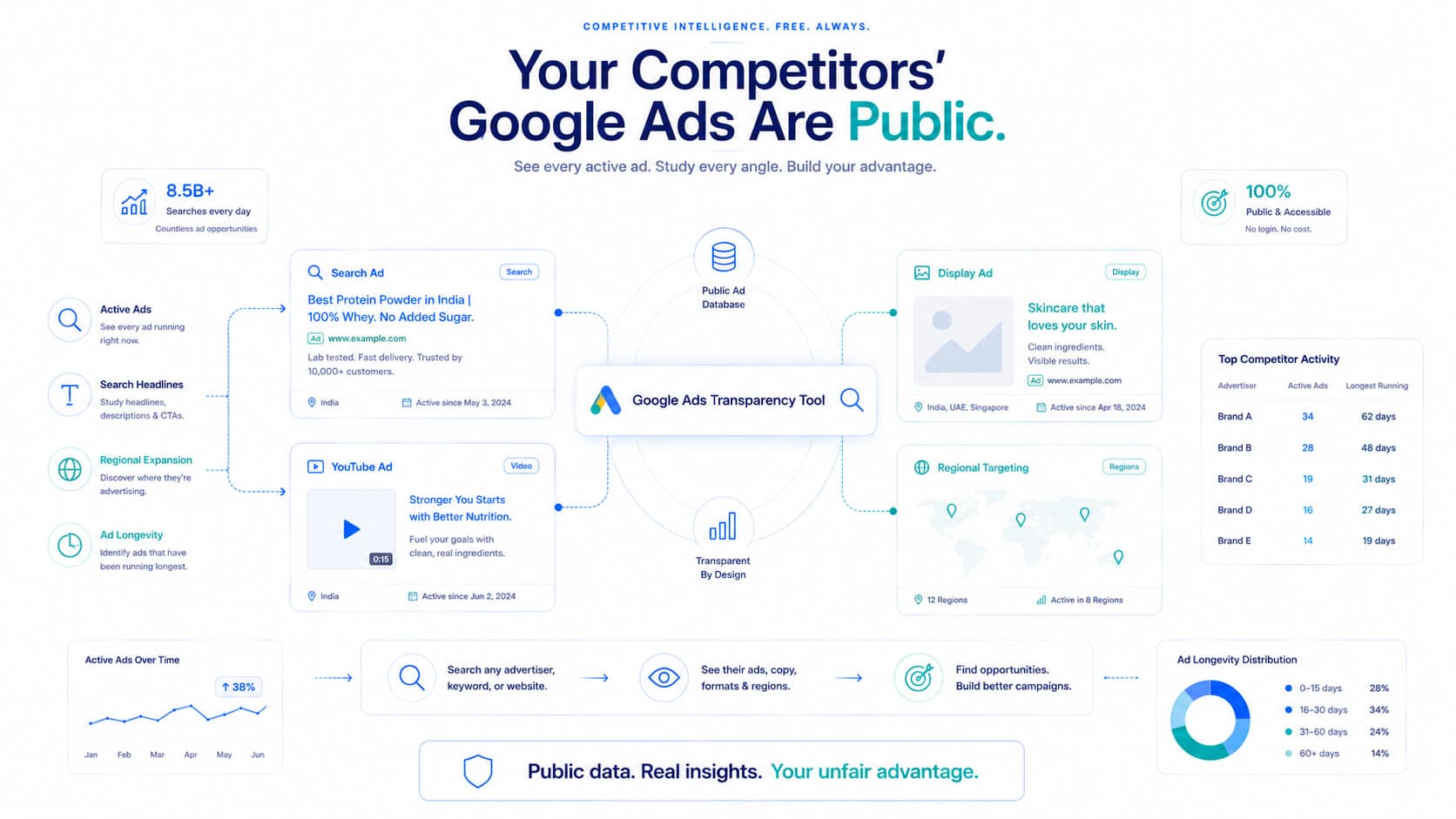
No. You can build a highly effective system using free tools: Facebook Ad Library, Google Ads Transparency Center, and a shared Google Sheet or Notion database.
Treating it as a one-off activity rather than a system. Screenshotting an ad and sharing it in Slack is not intelligence — it's observation. Intelligence requires tracking patterns over time.
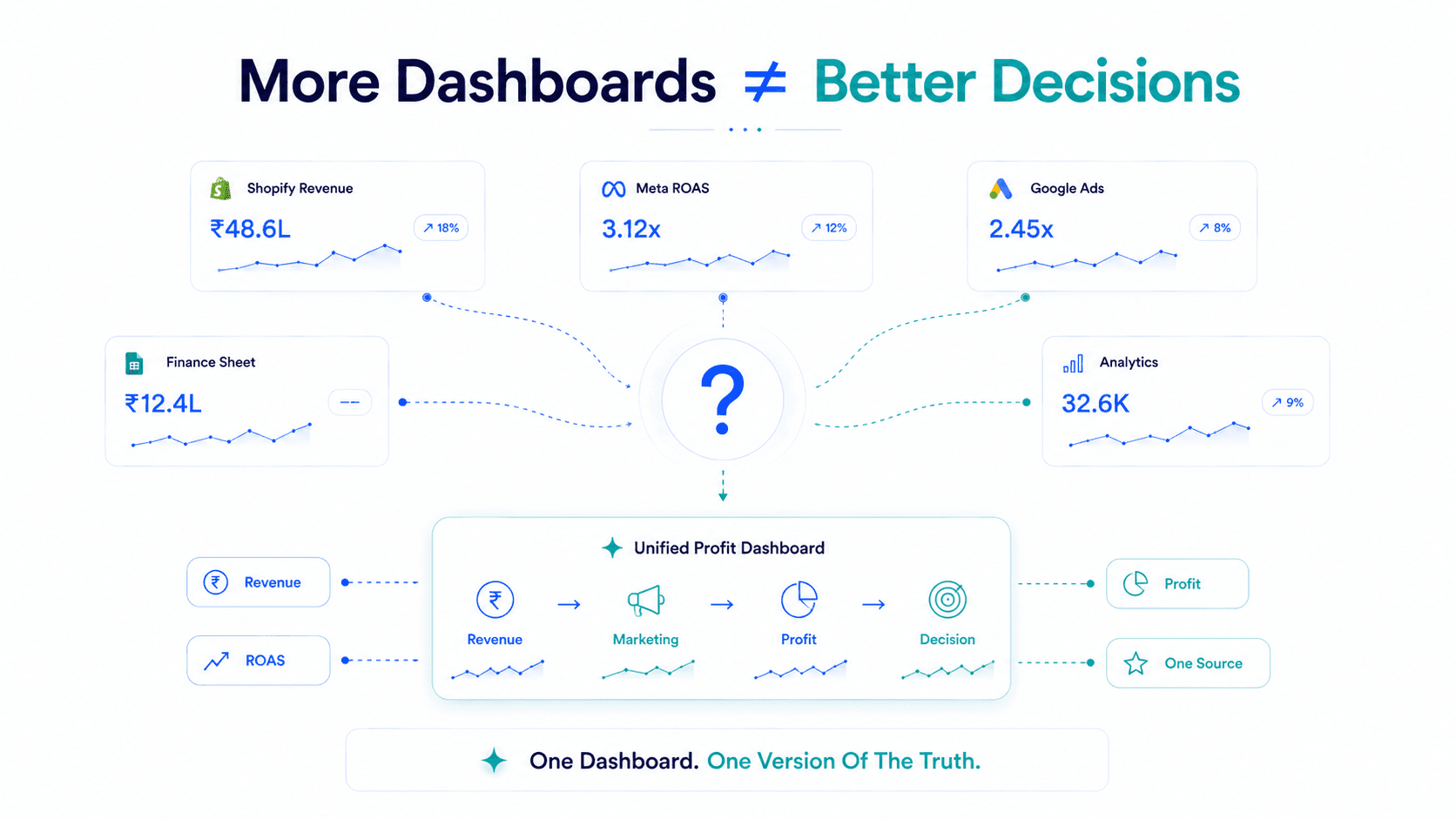
Don't copy competitor strategies blindly. They might be losing money. Flable shows your real CM2 live, so you know what's actually profitable.
Start Measuring Your Margin →